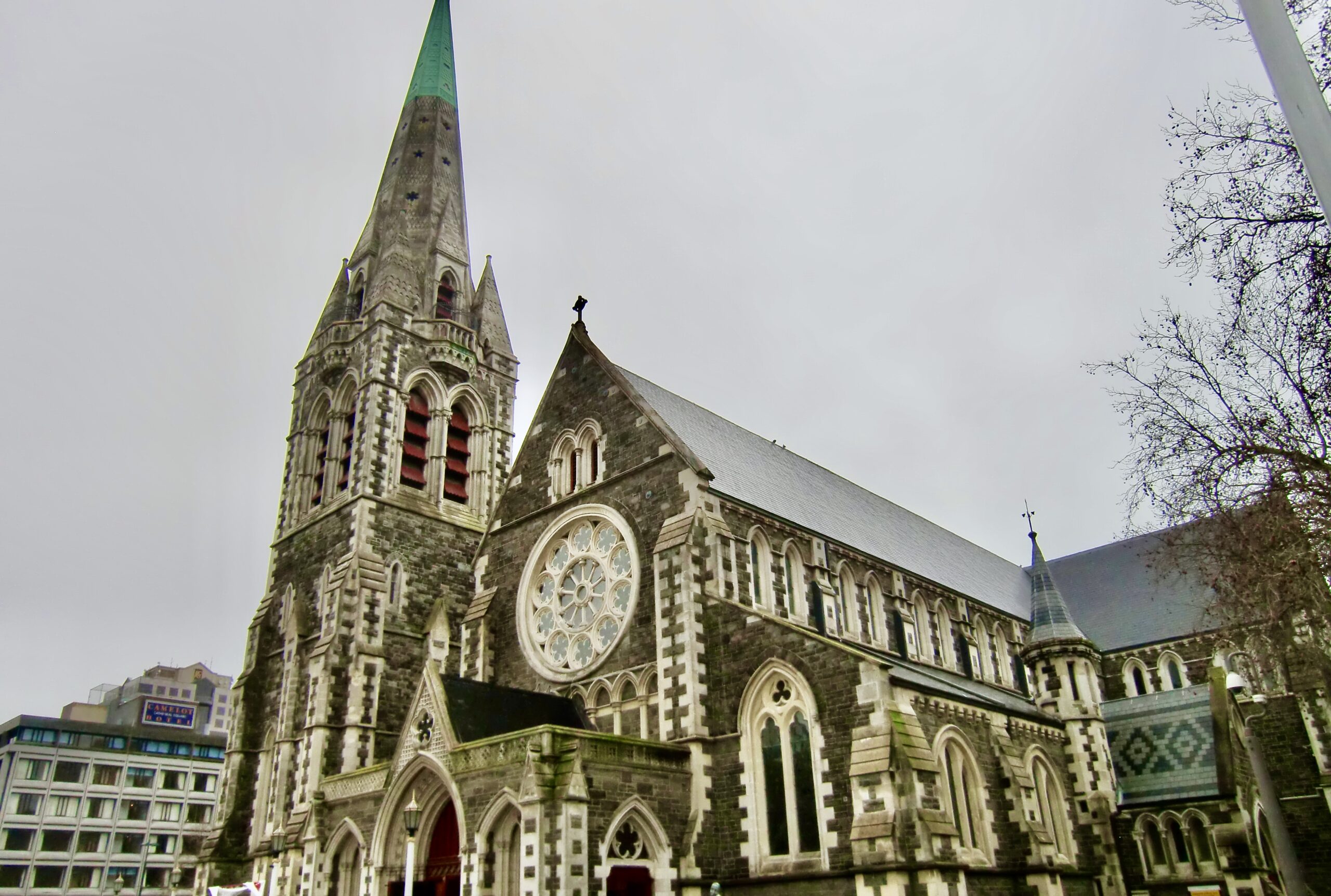
I arrived in Christchurch after stops in Dunedin and Timaru, stepping off the bus into a heavy grey overcast. Not ideal weather for sightseeing, but Christchurch winters are mild enough that the cold was never really a problem. After checking into my hostel, I had a few hours of daylight left and set out to walk.
There’s a personal reason Christchurch means a lot to me. It was the first New Zealand city I ever visited — a family trip when I was a university student — and something about the place lodged itself in me. The architecture, the rivers, the atmosphere. That visit is what made me want to live here. I went home and decided to do a language school program in New Zealand. Then I chose Dunedin, a city I knew absolutely nothing about. But that’s a different story.
Day 1: Exploring the City Under Grey Skies
Cathedral Square — The Cathedral Still Standing
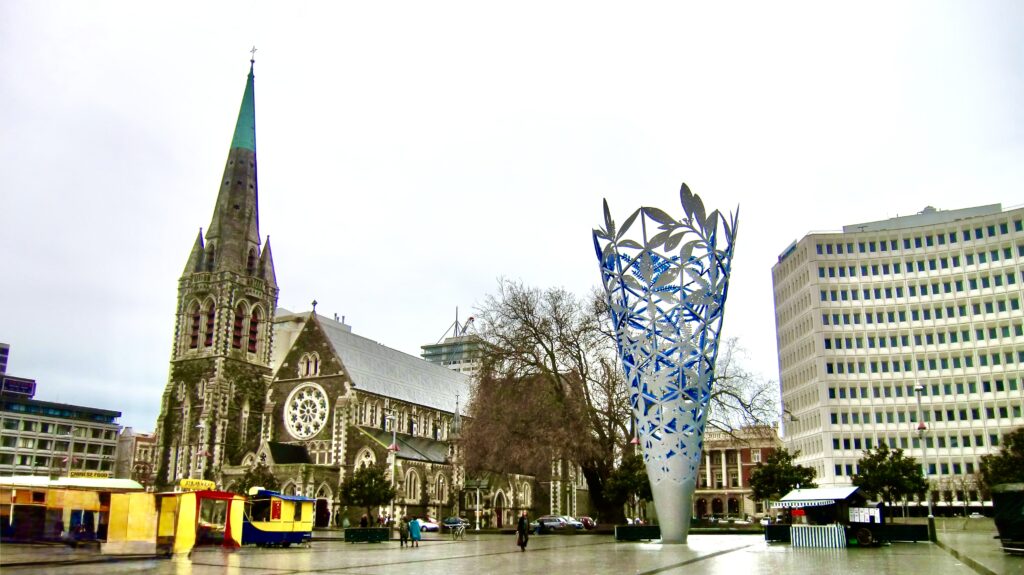
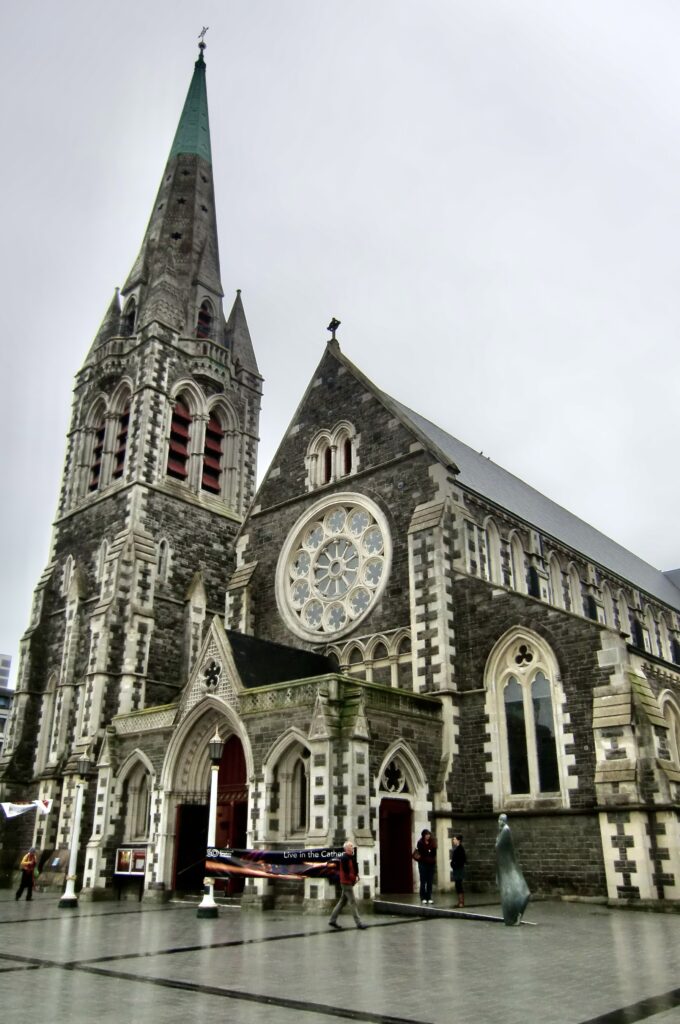
My first stop was Cathedral Square, the symbolic center of Christchurch. The Cathedral was there — completely intact, exactly as it had always been. Gothic spire, large rose window, heavy stone facade. I took photographs without any particular sense of urgency. A few months later, that building would be severely damaged in the February 2011 earthquake, and the spire I photographed would be gone. Restoration work has been ongoing for over fifteen years and is still not complete.
Standing in the square that evening, everything felt calm. Tourists drifted by, a few market stalls were set up along the edges, locals cut through on their way somewhere. No one was thinking about earthquakes.
Beside the cathedral stood The Chalice — a large contemporary sculpture in blue and silver that catches the light even on an overcast day. Bold, modern, and oddly at home next to a Gothic church. The square had that quality of a good European city center: a place that belongs to everyone.
Bridge of Remembrance
A short walk brought me to the Bridge of Remembrance, a memorial arch on the banks of the Avon River honoring soldiers who died in the First and Second World Wars. The white stonework is elegant, and the scale is restrained in a way that feels right for a memorial — present without dominating. The river runs quietly beneath it.

Colombo Street
I walked a stretch of Colombo Street, one of the city’s main thoroughfares. Tram tracks running straight down the center, heritage shopfronts on one side, newer retail on the other. The kind of street that gives a city a spine.

A Café Stop
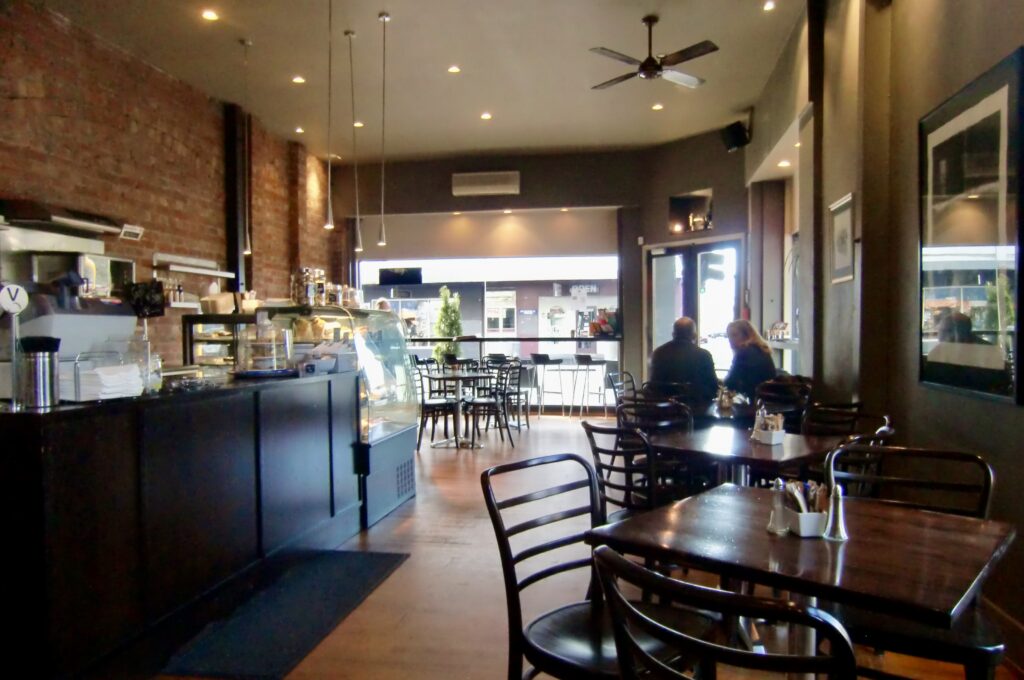
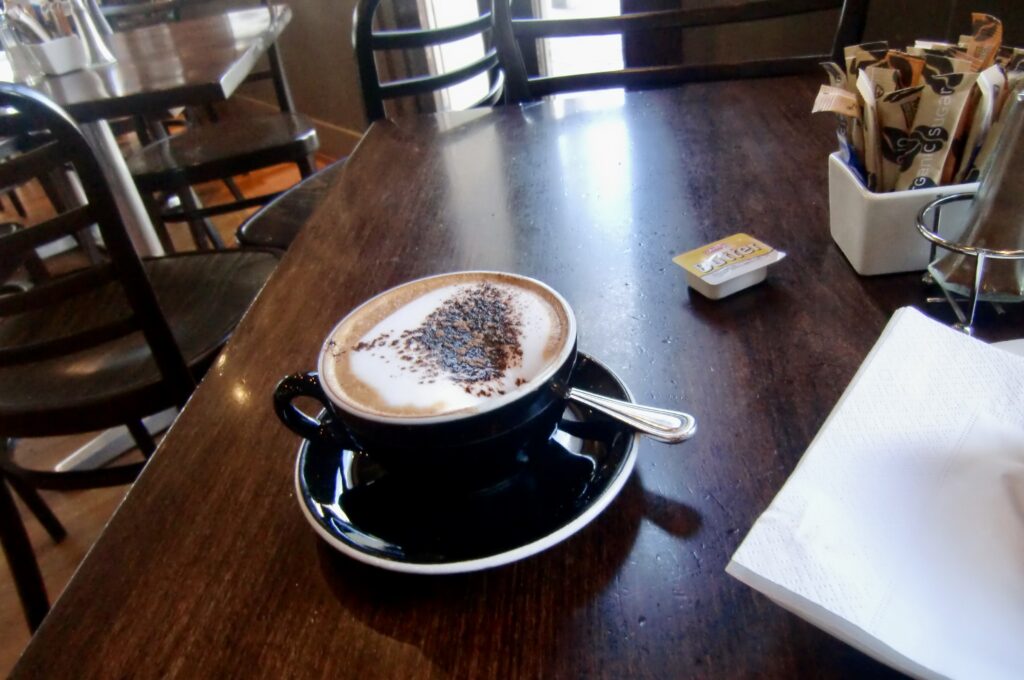
By mid-afternoon I was tired and cold enough to duck into a café. Wooden tables, brick walls, low warm light. I ordered a hot chocolate and sat for a while. Simple and unhurried — which is exactly the right pace for Christchurch.
Day 2: Clear Skies and a Proper Look at the City
The next morning was completely different. The clouds had cleared overnight and Christchurch was flooded with winter sunlight — the kind of sharp, clean light you only get in the Southern Hemisphere in the colder months.
Along the Avon River
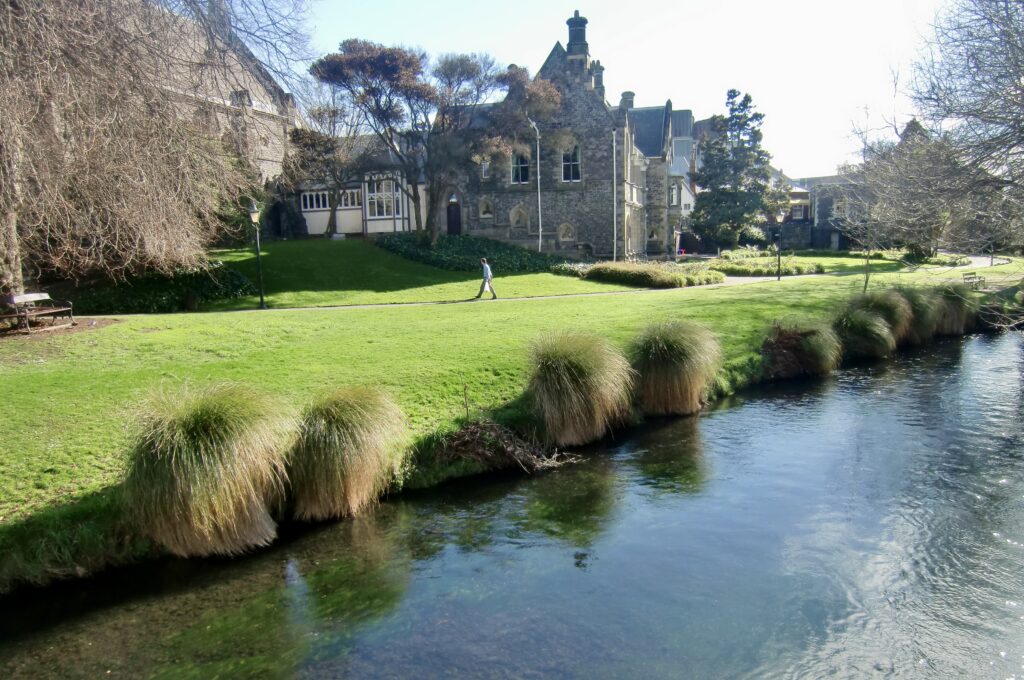
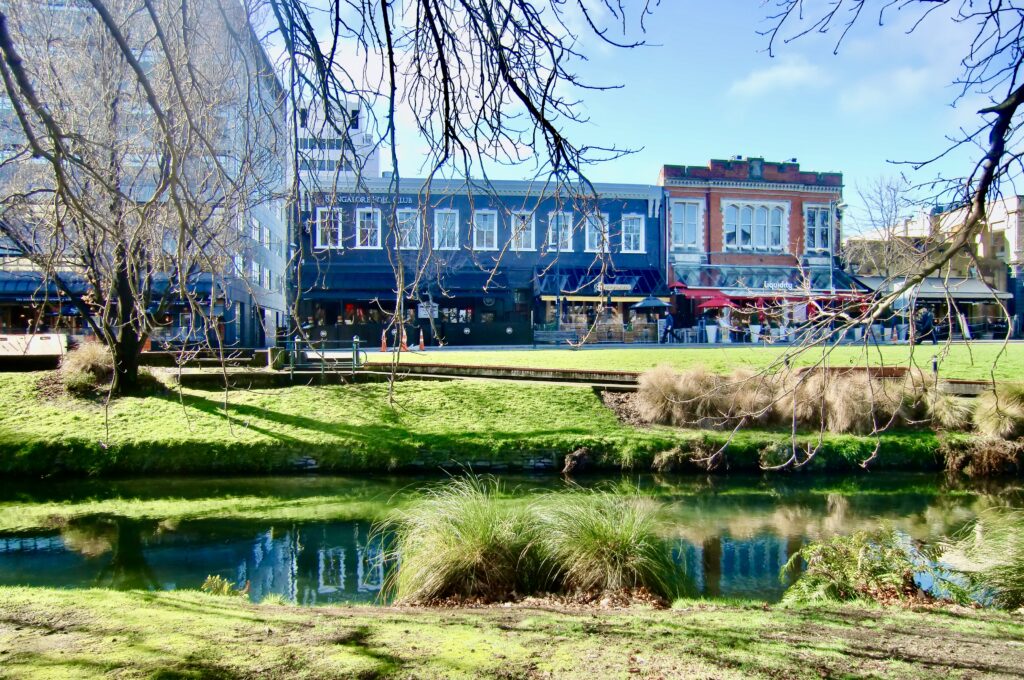
The Avon runs through the center of the city with a clarity that’s almost startling. Trees and buildings reflect on the surface; the water moves slowly, quietly. Having a river like this at the heart of a city — walkable, unpretentious, genuinely beautiful — is one of the things that makes Christchurch unlike most New Zealand cities.
Canterbury Museum
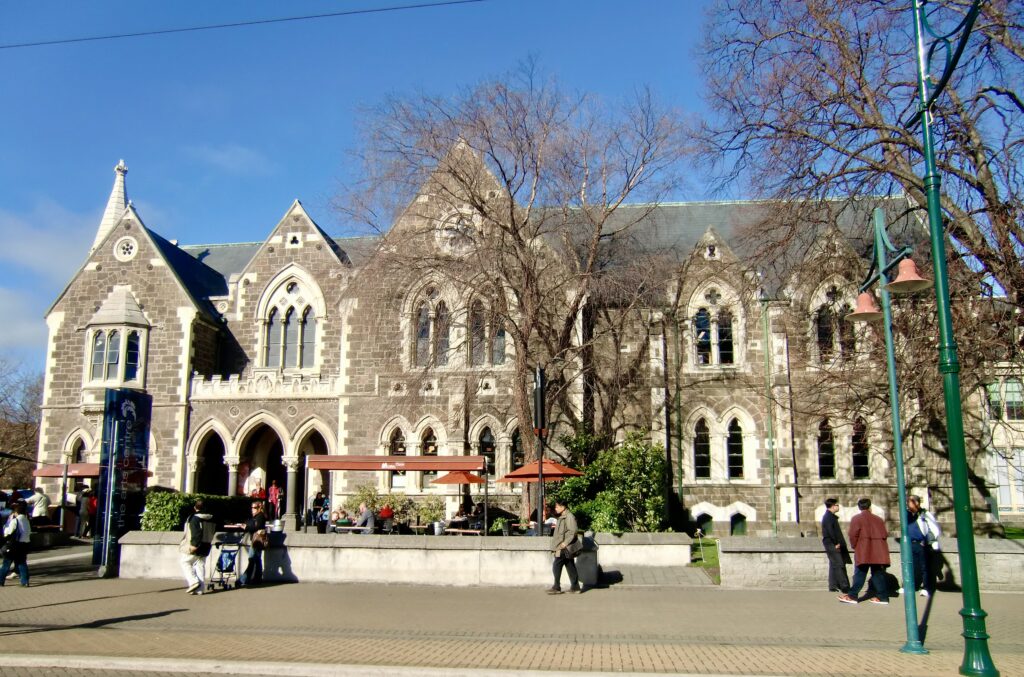
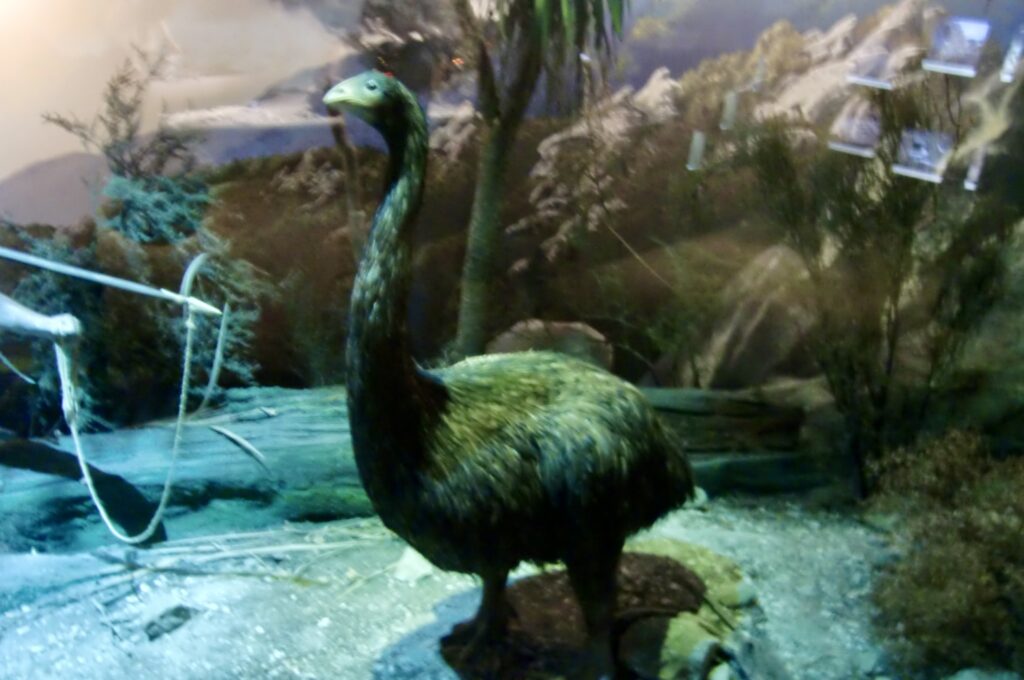
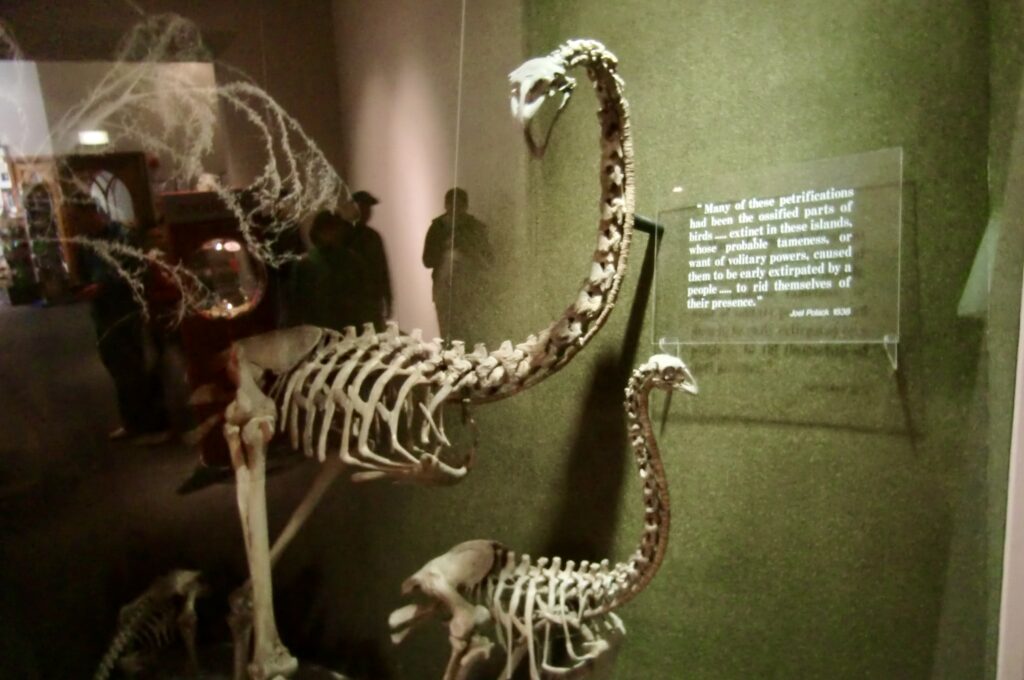
I spent a good part of the morning at Canterbury Museum, which turned out to be well worth the visit. The highlights were the moa — enormous extinct flightless birds that once roamed New Zealand, standing up to around 3.5 meters tall and hunted to extinction by Māori settlers, most likely by the 15th century. The skeletal reconstructions are genuinely impressive in person. Standing next to one, trying to imagine it alive, is one of those museum moments that doesn’t quite leave you. (It gave me goosebumps. Fitting, given that it’s a bird.)
The Trams, One More Time
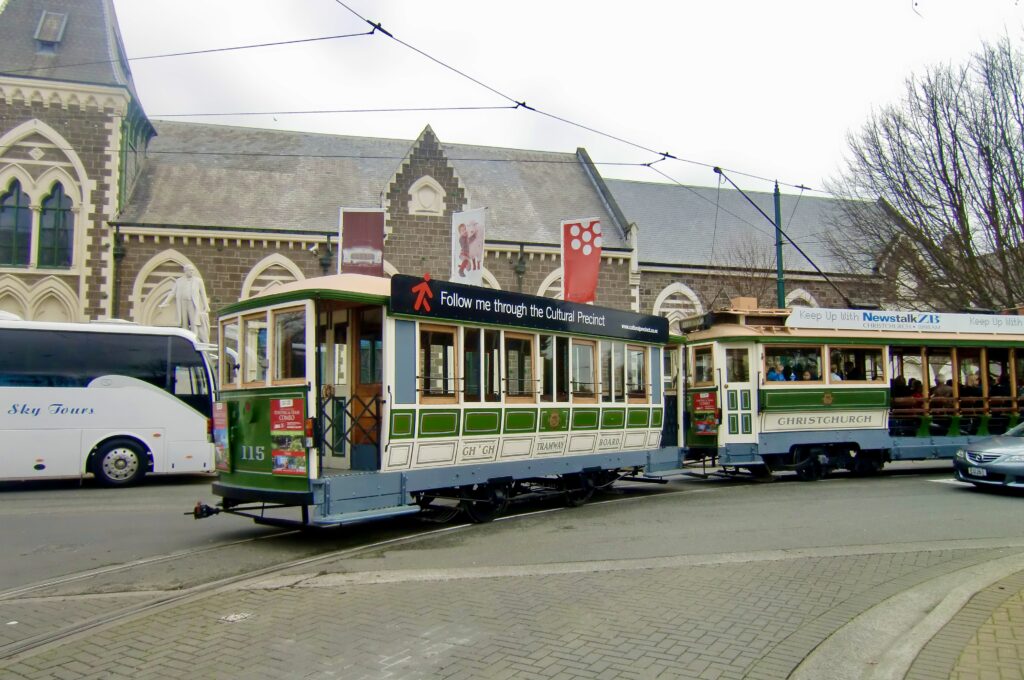
Leaving the museum into the now fully sunny afternoon, I walked back through the center one more time. The heritage trams were running — burgundy and cream, threading through streets lined with stone buildings. The whole scene had an unusual coherence, architecture and transport and streetscape all from roughly the same era, all still intact.
Final Thoughts
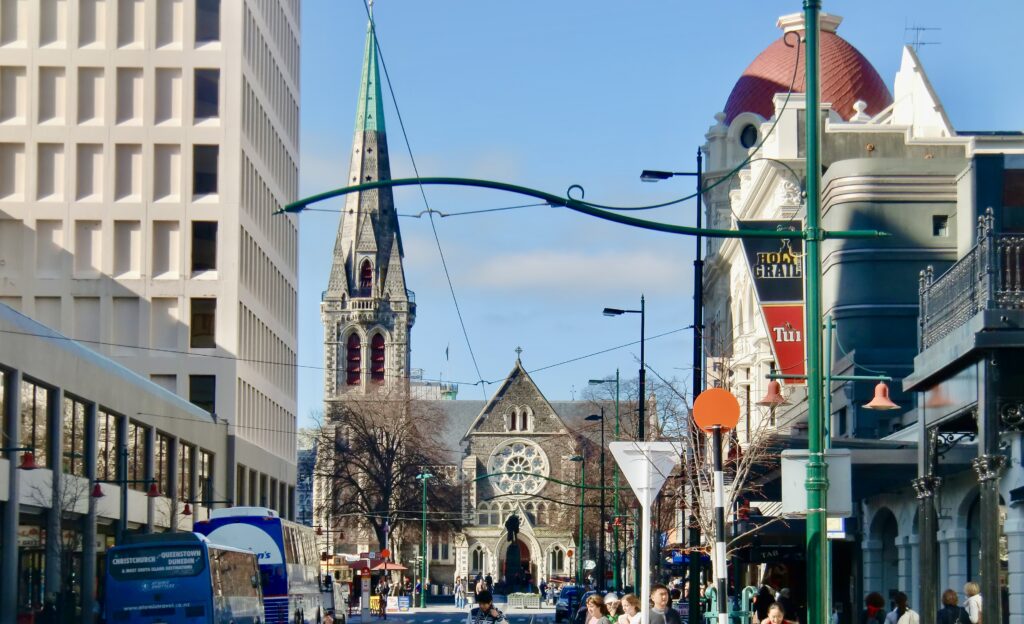
Looking back at these photos now, what strikes me most is how whole the city looks. Christchurch before the earthquake was genuinely beautiful — European in character, unhurried in tempo, with the kind of civic confidence that comes from well-built streets and a river through the middle. I’d visited once before and fallen in love with it then. This second visit reinforced everything I’d felt the first time.
I didn’t know what was coming. I’m glad I was there when I was.
Next up: a trip out of the city to Willowbank Wildlife Reserve, and a very determined attempt to spot a kiwi in the dark.


コメント