- From Berlin by train + local line to Ribnitz-Damgarten, then by taxi to the small peninsula town of Wustrow.
- A massive chunk of concrete—once part of a bunker—now lies half-swallowed by the sea, covered in graffiti. The contrast between nature and history is unforgettable.
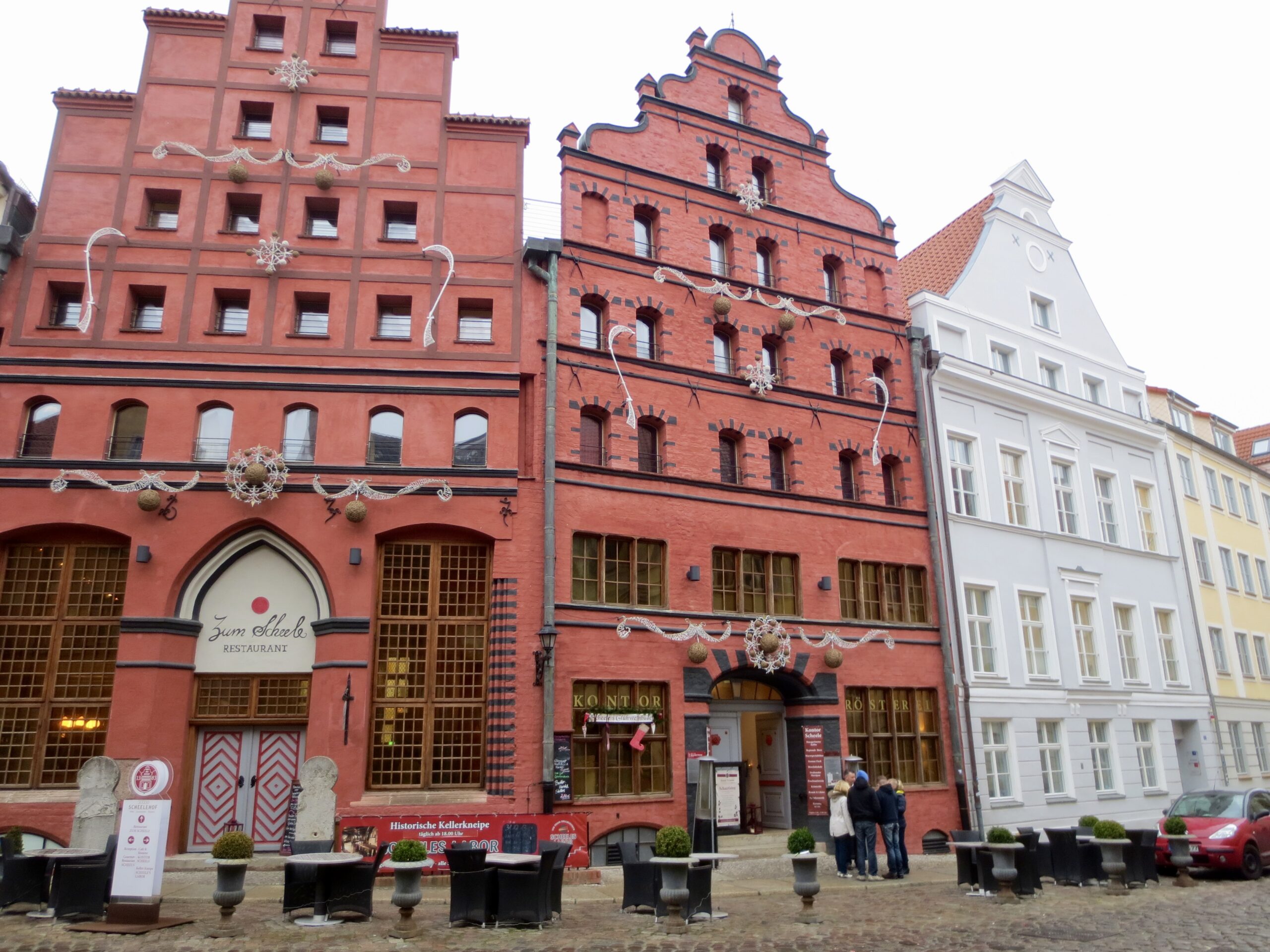
- In the former Hanseatic city of Stralsund, I spent a day among red-brick “Brick Gothic” architecture and the pride of a port town that once ruled the Baltic.
Heading North from Berlin, Chasing the Sea
When I lived in Berlin, I traveled to many parts of Germany. When people think of Germany, places like Neuschwanstein Castle, Cologne Cathedral, or cities such as Munich and Düsseldorf often come to mind. But this time, I want to share a quiet weekend trip—staying in a vacation house along the Baltic Sea and doing, more than anything, nothing.
In fact, Germany is one of those countries where you can only see the “sea” along the northern coasts—on the Baltic and the North Sea. And yet, from Berlin, you only need to travel a little to be welcomed by white sand beaches and a deep blue sea that hides remnants of old fortifications.
Getting there (the route we took)
- Berlin Hbf → Rostock (about 2 hours)
- Rostock → Ribnitz-Damgarten (about 30 minutes on a local line)
- Ribnitz-Damgarten → Wustrow (by taxi to a small resort town on the peninsula)
A “Graffiti Fortress” Piercing the Sea
Wustrow sits at the entrance of the Fischland–Darß–Zingst peninsula—a quiet seaside town with a calm, reserved atmosphere. This time, instead of a hotel, we rented a vacation house—and it turned out to be the perfect choice. There were fewer tourists, and the sound of waves became the town’s background music.

When you reach the coast, the white sand feels like it stretches all the way to the horizon. And then, suddenly, something leaps into view: a huge concrete mass painted in vivid graffiti.

It wasn’t a rock. It was said to be the remains of a former military facility—a bunker that once stood atop the cliffs. Over the years, coastal erosion caused the cliff to collapse, and the structure supposedly slid down into the sea.
A concrete ruin being washed by waves—covered in bright, unapologetic art.
Nature and the relics of history captured in a single frame. It’s the kind of scene you rarely encounter in Japan.
A Drive to the UNESCO Port Town of Stralsund
During our stay, a friend arranged a car, so we drove farther east to Stralsund. The town flourished as a major city of the Hanseatic League, and its entire historic old town is designated as a UNESCO World Heritage Site.

The moment you step out of the car, you’re surrounded by red brick—everywhere you look. The City Hall (Rathaus) dominating the square is especially striking, with its jagged, pointed gables reaching toward the sky. It’s a quintessential example of northern Germany’s Brick Gothic (Backsteingotik). In a region where stone was scarce, baked brick became a way to express devotion and authority. The façade is so overwhelming—often described as one of the Baltic coast’s finest—that you find yourself momentarily speechless.
The Pride of a Port Town—and a History of Conflict
As you walk through the town, you can feel time etched into its streets—time lived alongside the sea.

In the harbor, the beautiful sailing ship Gorch Fock I lay anchored, quietly radiating the pride of a former maritime power.
In the 14th century, Stralsund stood at the center of the Hanseatic world and faced off against Denmark. The Peace of Stralsund in 1370 became a turning point, helping the Hanseatic League secure dominance over the Baltic. In museums, you even find golden objects said to have Viking origins—reminders that these waters were contested and fought over for centuries.

Along the waterfront, massive brick warehouses line up in silence—places where salt, furs, and spices once piled up after arriving from across the world. Their scale doesn’t feel small even next to modern buildings.

And then, in a narrow alley, I ran into graffiti reading “Tierrechte!” (“Animal rights!”). Medieval weight and modern voices layered together—somehow, that mixture felt right.
Ending the Day with the Night View at the Old Market Square

As the sun set, we returned to the city’s center: Alter Markt (the Old Market Square). The illuminated City Hall and the Christmas tree standing in the middle glowed against the night sky.

With that view as our backdrop, we did a tasting of local beers—an ending that felt like the perfect climax to the day.
Travel Notes (Access / What to Pack / Best Time)
Access (Public transport)
- Berlin Hbf → Rostock: about 2 hours by long-distance train
- Rostock → Ribnitz-Damgarten: about 30 minutes by local line
- Ribnitz-Damgarten → Wustrow: by taxi onto the peninsula (travel time varies by road conditions)
Tips for your stay
- A vacation house is ideal for multiple nights. If you want to cook and take it slow, stocking up on groceries in advance is a good idea.
- The seaside wind can be strong and surprisingly cold—even in summer—so a windbreaker is reassuring.
- The sand is very fine and easily gets into camera lenses. If you shoot with a camera, a blower and/or protective filter helps.
Best seasons
- May–September: long daylight hours, perfect for both beach time and town walks.
- Advent season: beautiful illuminations and a Christmas tree at Alter Markt (just be prepared for the cold).
Next Episode
This journey through northern Germany showed me both sides: vast nature and the heavy, layered history built by people. Next time, I’ll head farther west—to Germany’s largest port city: Hamburg.
コメント