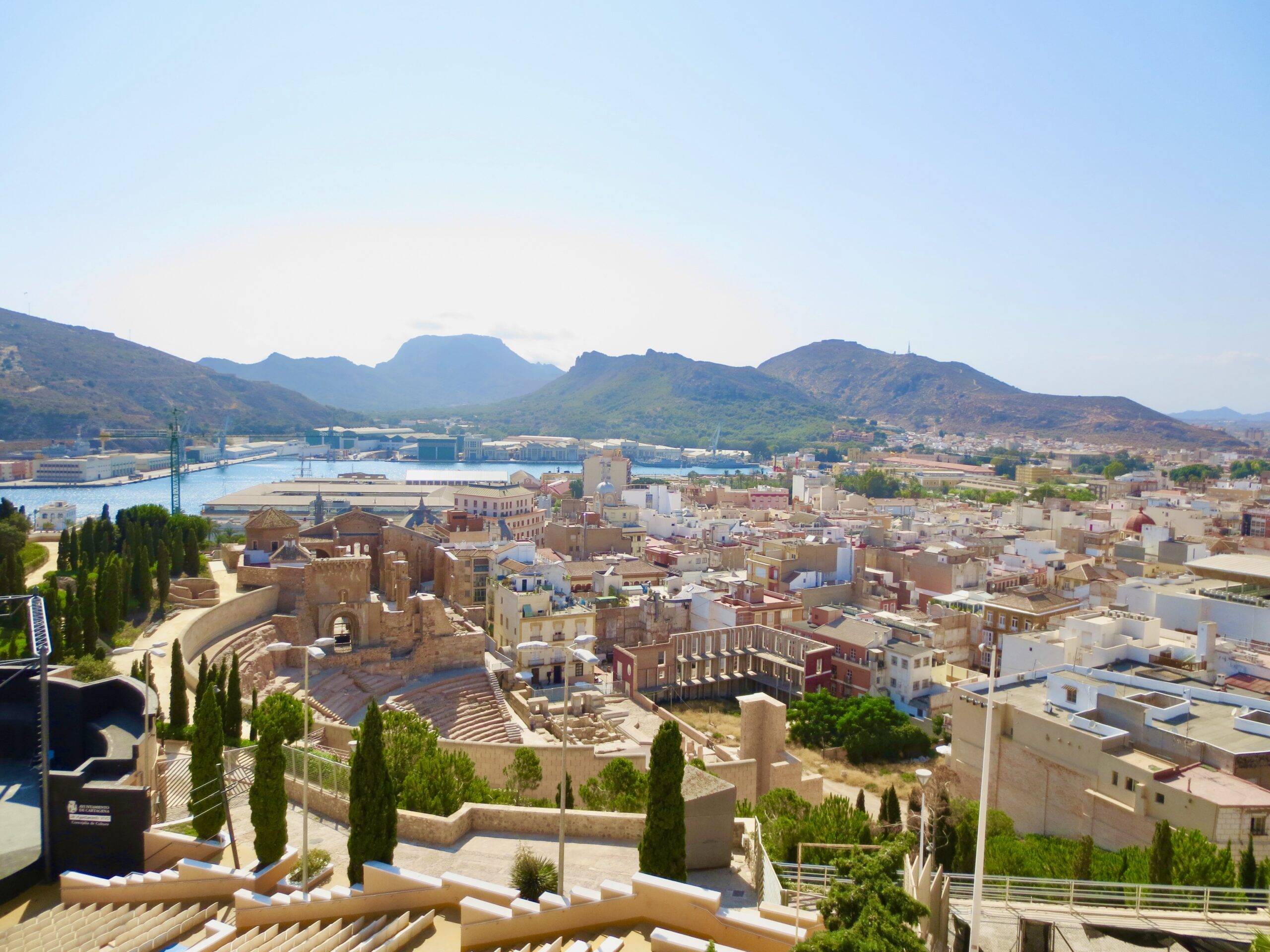
The city I visited this time, Cartagena, is a historic port town whose story stretches all the way back to ancient Roman times.
With its Roman theatre, archaeological sites, elegant architecture, and peaceful harbor, it’s a place where history and the Mediterranean atmosphere coexist beautifully.
Strolling through the city, you can feel the layers of history beneath the wide Mediterranean sky—a city that’s enjoyable simply to walk around.
- A Palm‑Lined Entrance to the City
- Sculptures Overlooking the Harbor
- An Elegant Square in Front of the City Hall
- The Impressive Scale of the Roman Theatre (Teatro Romano)
- A Walk Through History with Roman Ruins Scattered Around Town
- Colorful Shopping Streets in the Old Town
- A Panoramic View of Cartagena from the Hill
- Why Cartagena Flourished as a “Naval City”
- Cartagena: A City Where “Roman Ruins × Naval Heritage” Come Together
A Palm‑Lined Entrance to the City
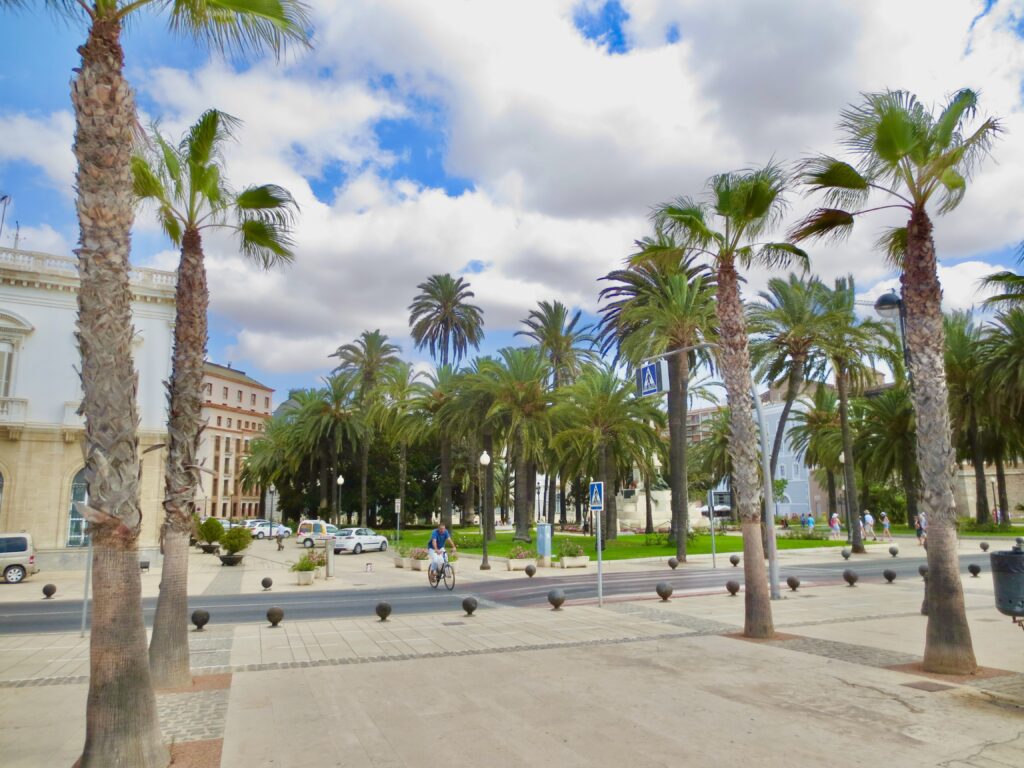
Entering the center of Cartagena, you’re first welcomed by a spacious square lined with palm trees.
The stately buildings against the bright blue sky and the greenery around them blend the feel of a Mediterranean resort with that of a historic European city.
It’s a pleasant area to walk through and the perfect starting point for exploring the town.
Sculptures Overlooking the Harbor
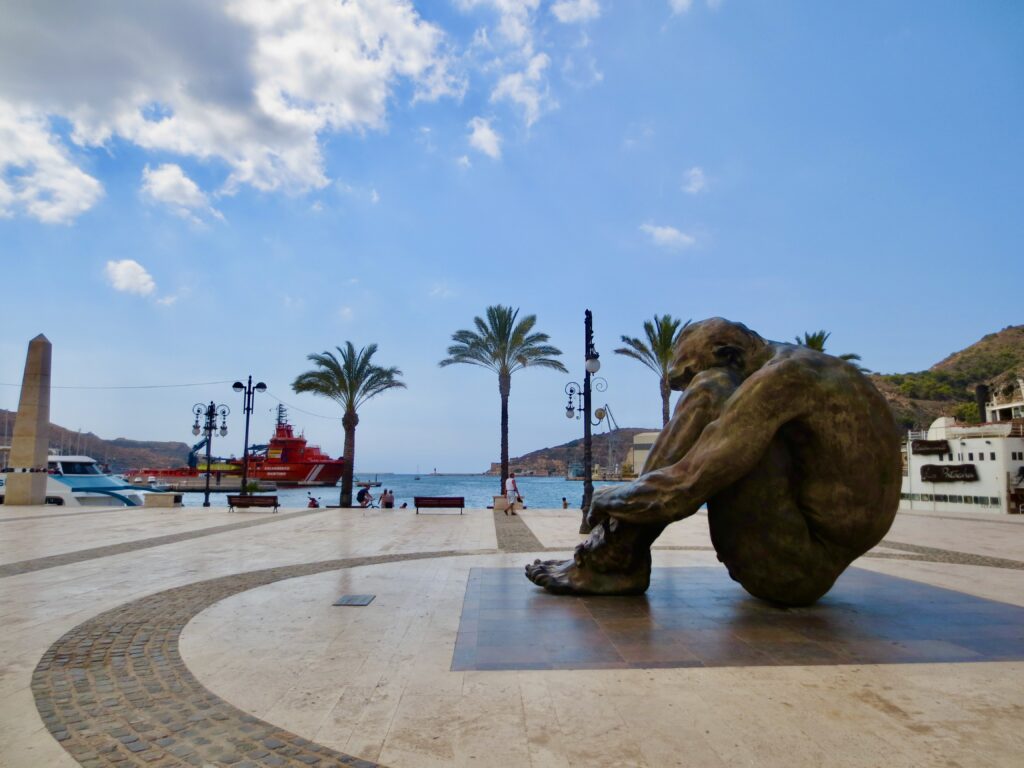
Along the waterfront sits an impressive, oversized sculpture.
Behind it stretches Cartagena Bay, where red vessels are anchored—a scene full of the energy unique to a port city.
The sky feels wide open here, making “a city by the sea” the perfect description.
An Elegant Square in Front of the City Hall
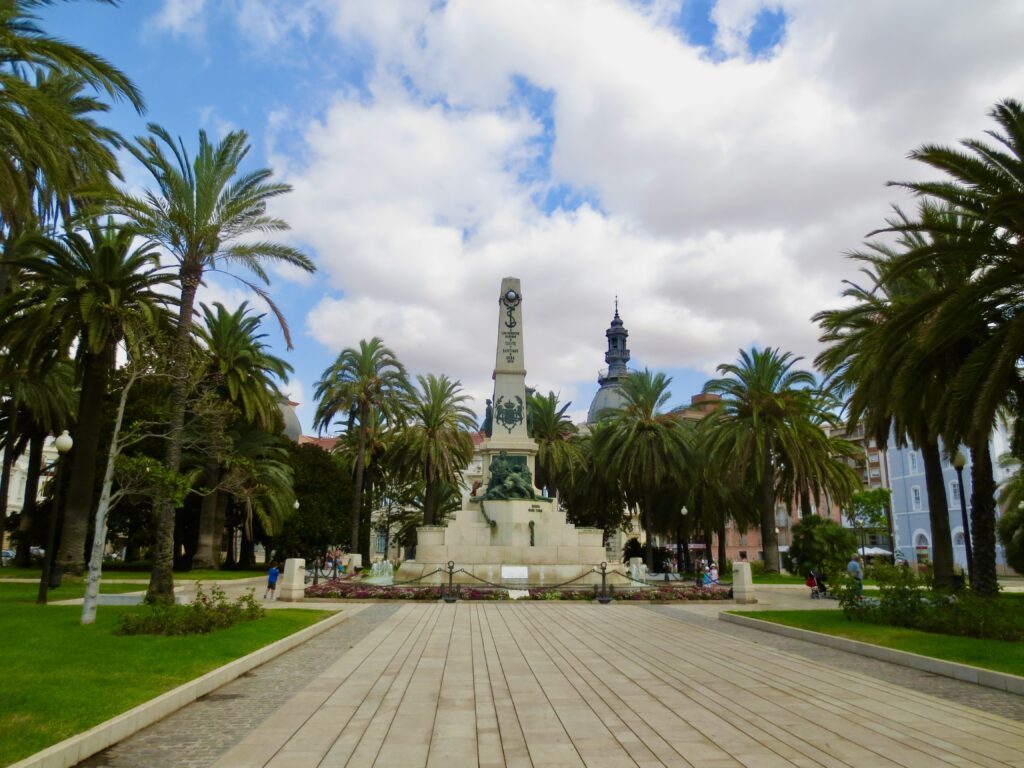
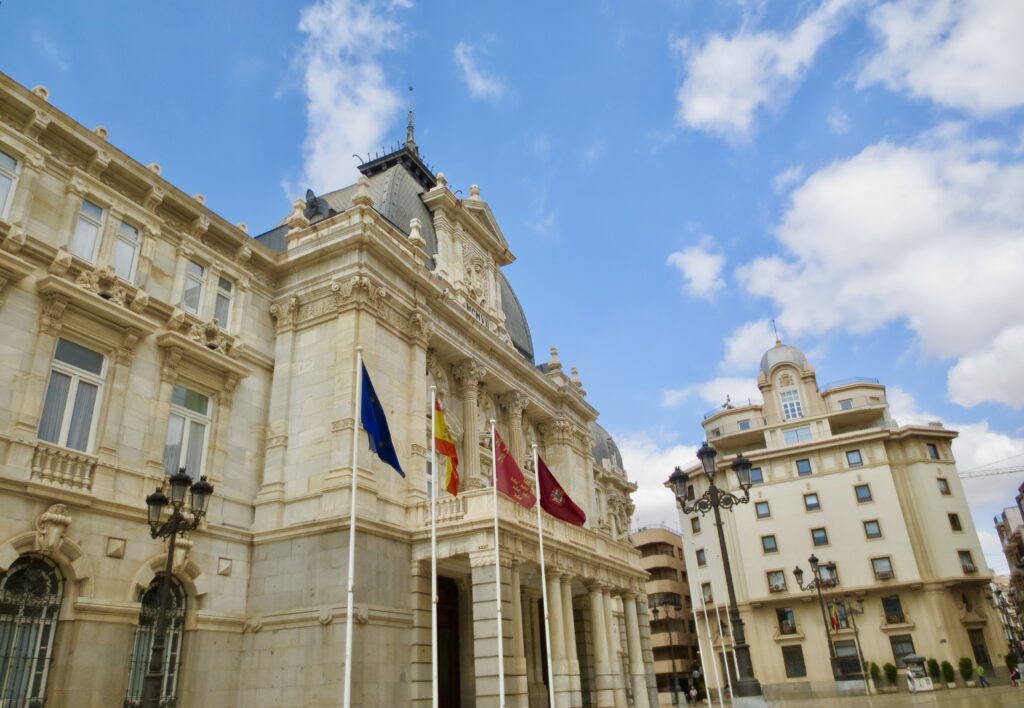
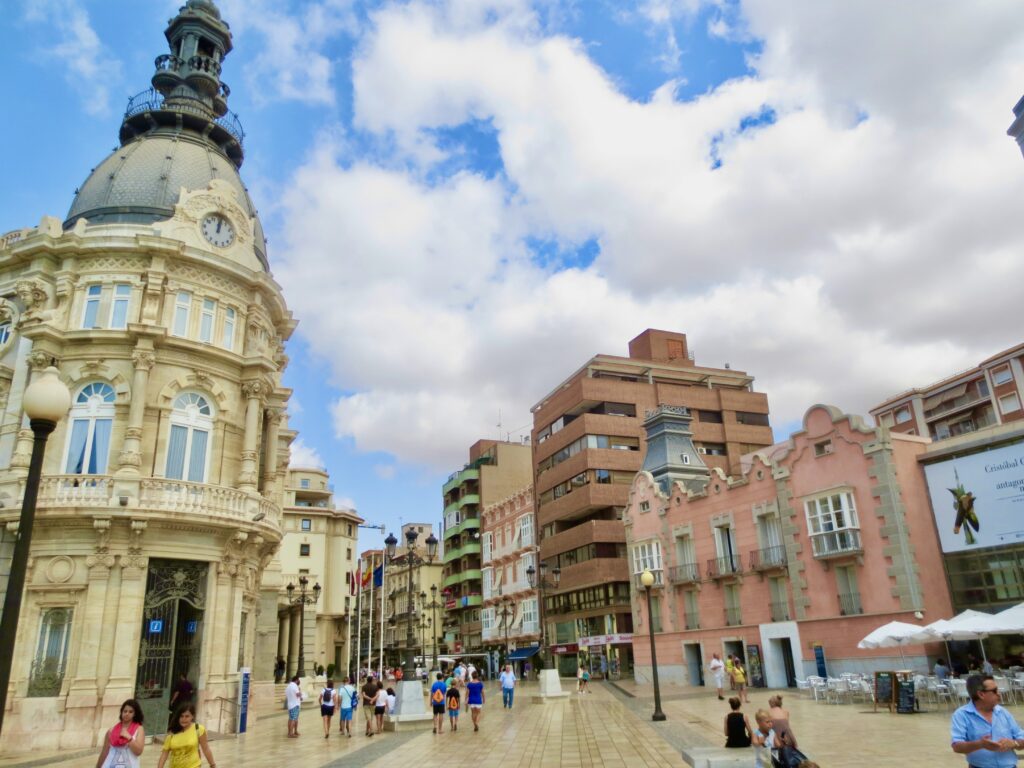
One of the most memorable spots in Cartagena is the beautiful square centered around the Palacio Consistorial, the city hall.
The white, palace‑like building stands proudly, flanked by colorful historic buildings.
If you love places where modern life blends with centuries‑old architecture, this square is irresistible.
As the pictures show, the decorative details on the buildings are stunning, and simply walking through this area feels distinctly “European.”
The Impressive Scale of the Roman Theatre (Teatro Romano)
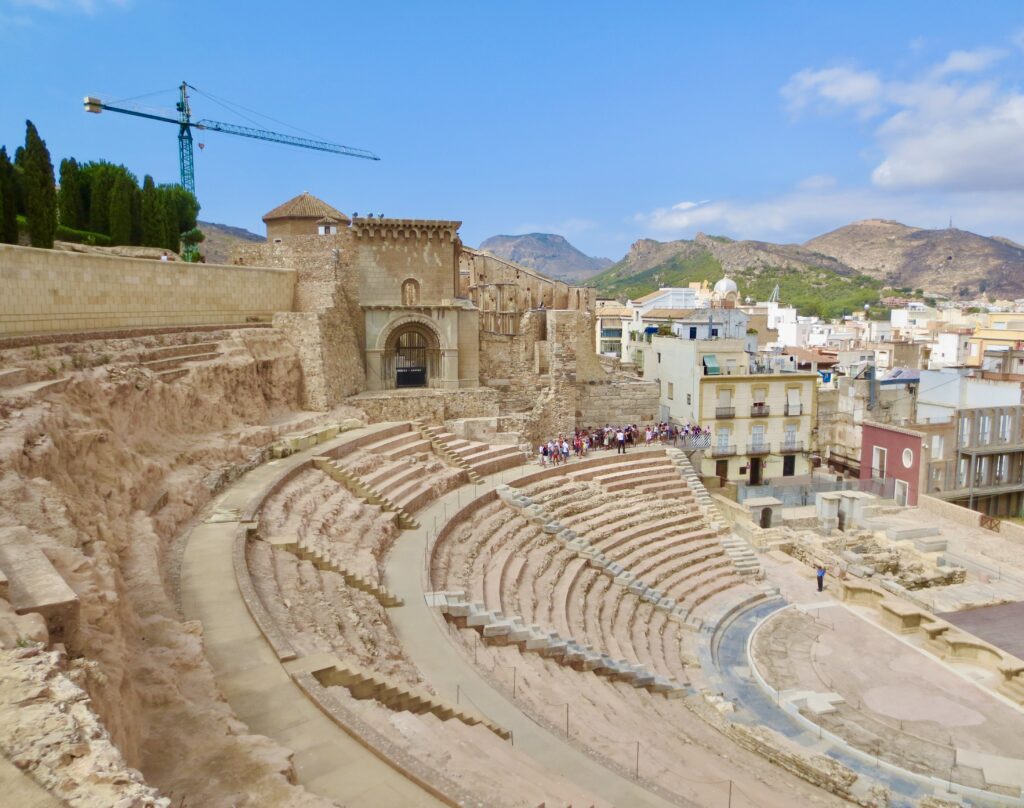
When you think of Cartagena, the Roman Theatre inevitably comes to mind.
Built in the 1st century BC, this circular theatre is remarkably well preserved, and standing in its seating area makes it easy to imagine ancient times.
Climbing to the top reveals sweeping views of the city—an absolute must‑see when visiting Cartagena.

A Walk Through History with Roman Ruins Scattered Around Town
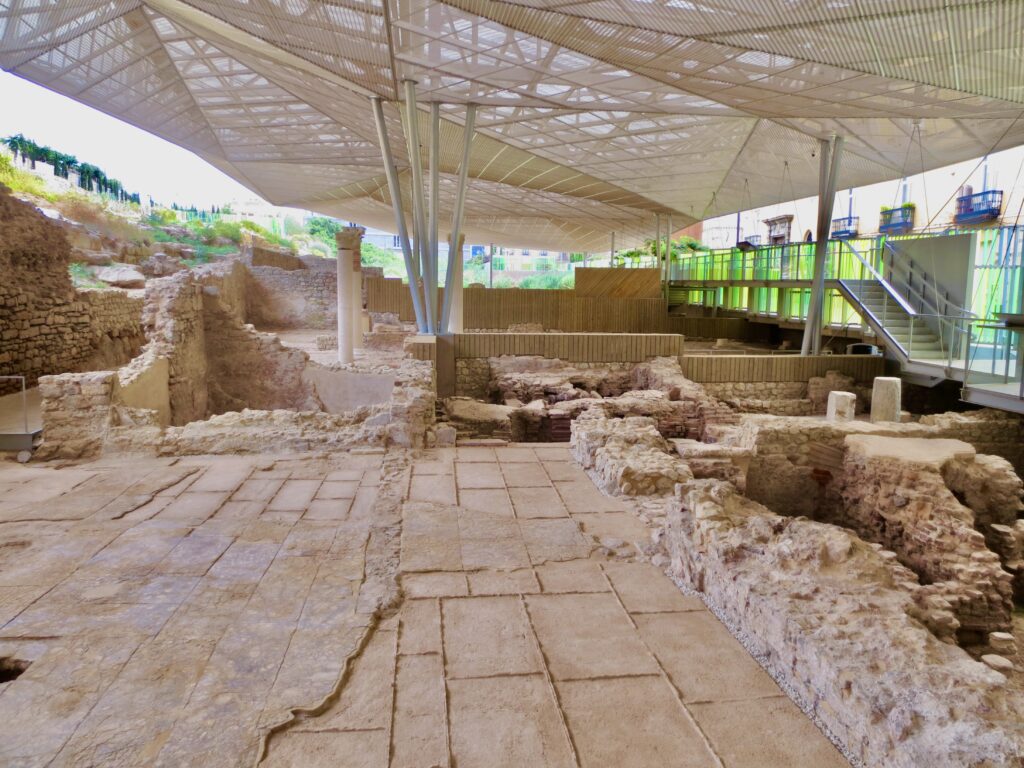
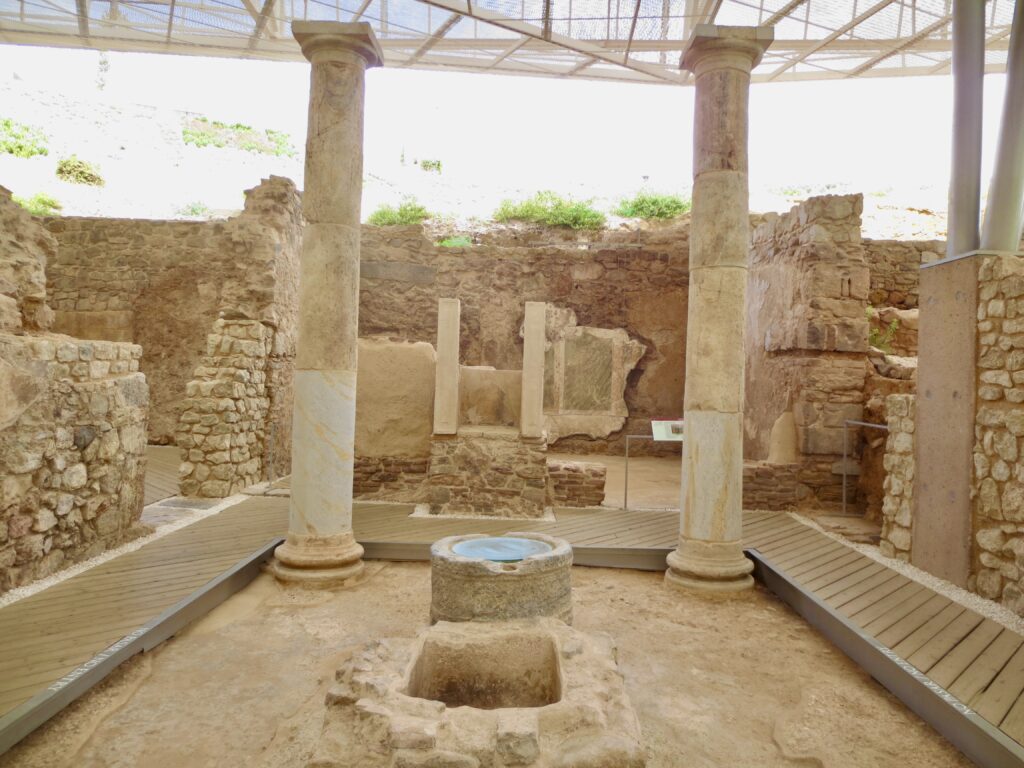
While walking through the city center, it’s not unusual to suddenly come across archaeological zones.
As shown in the photos, some ruins are preserved under museum‑like roofs, while others appear amid remains of ancient buildings.
You can truly enjoy Cartagena’s unique blend of “ancient Rome woven into modern life.”
Colorful Shopping Streets in the Old Town
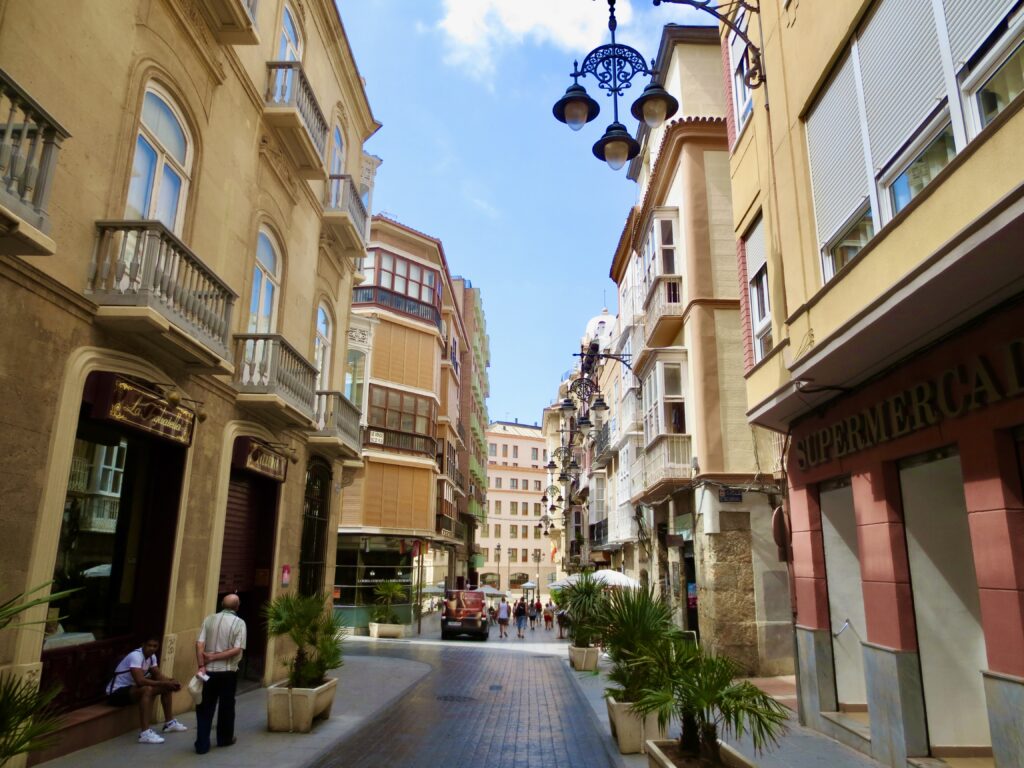
Cartagena’s Old Town has lively stone‑paved shopping streets lined with bars, cafés, and small shops.
The window designs and building facades are charming, making it a perfect place for wandering and taking photos.
It’s also a great way to experience the local atmosphere.
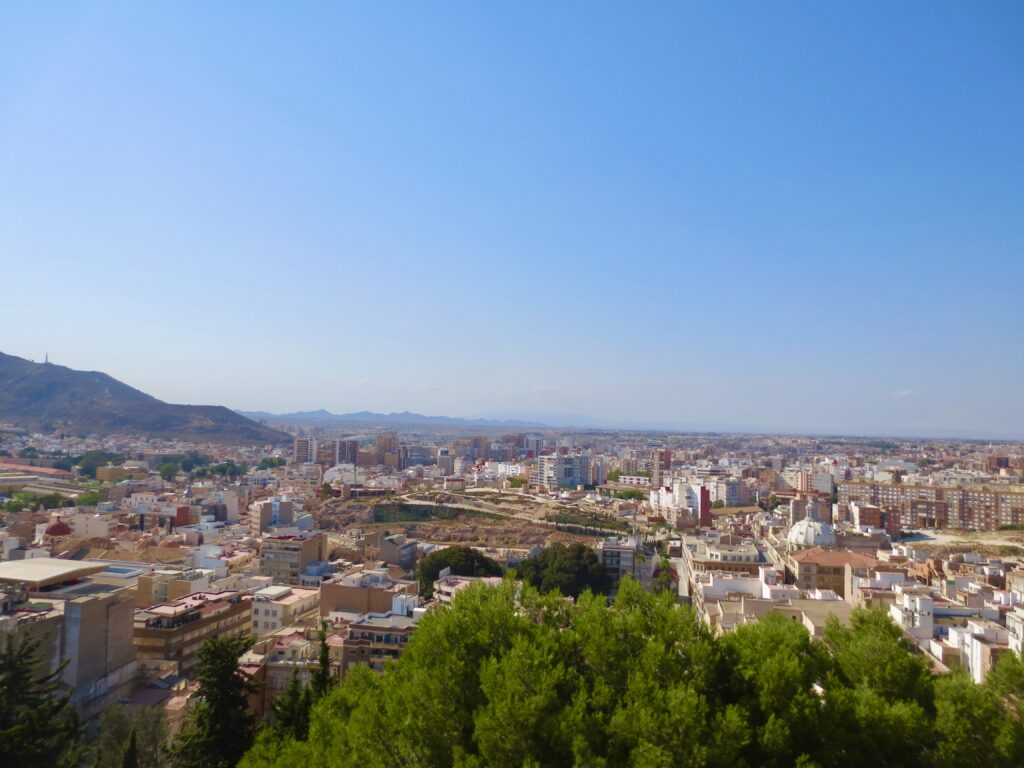
A Panoramic View of Cartagena from the Hill
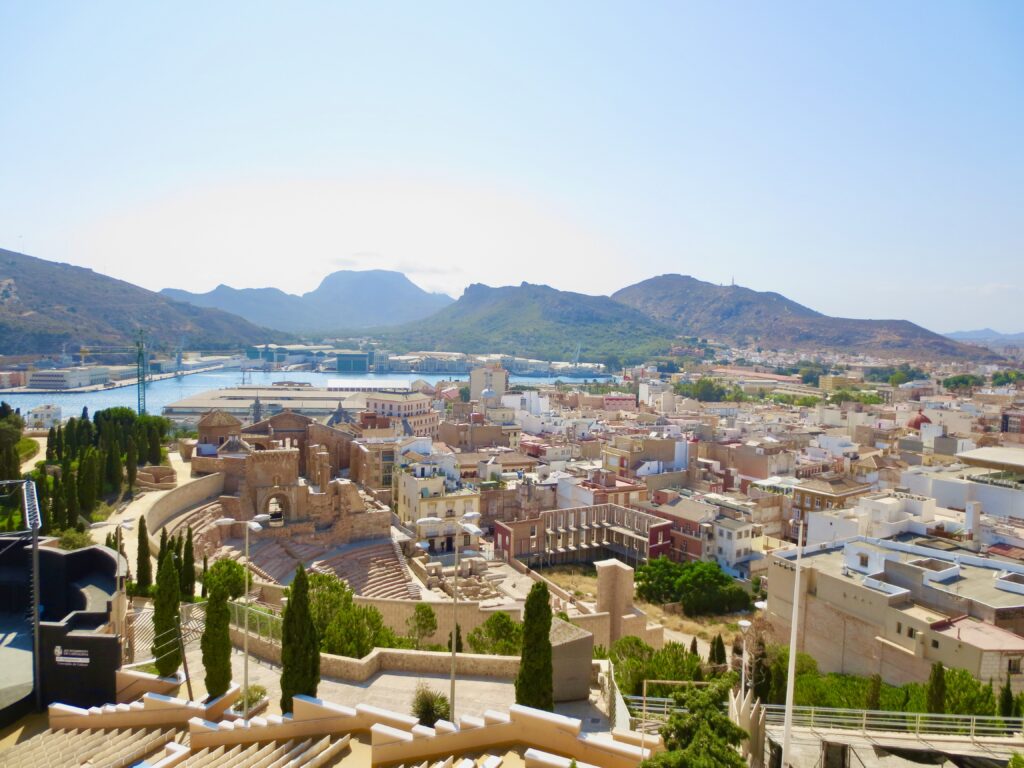
Climbing the hill near the Roman Theatre provides a full view of the city below.
From here, you can see:
- rows of colorful buildings
- the distant mountains
- the bright blue sea leading to the harbor
All layered together into the quintessential Cartagena landscape.
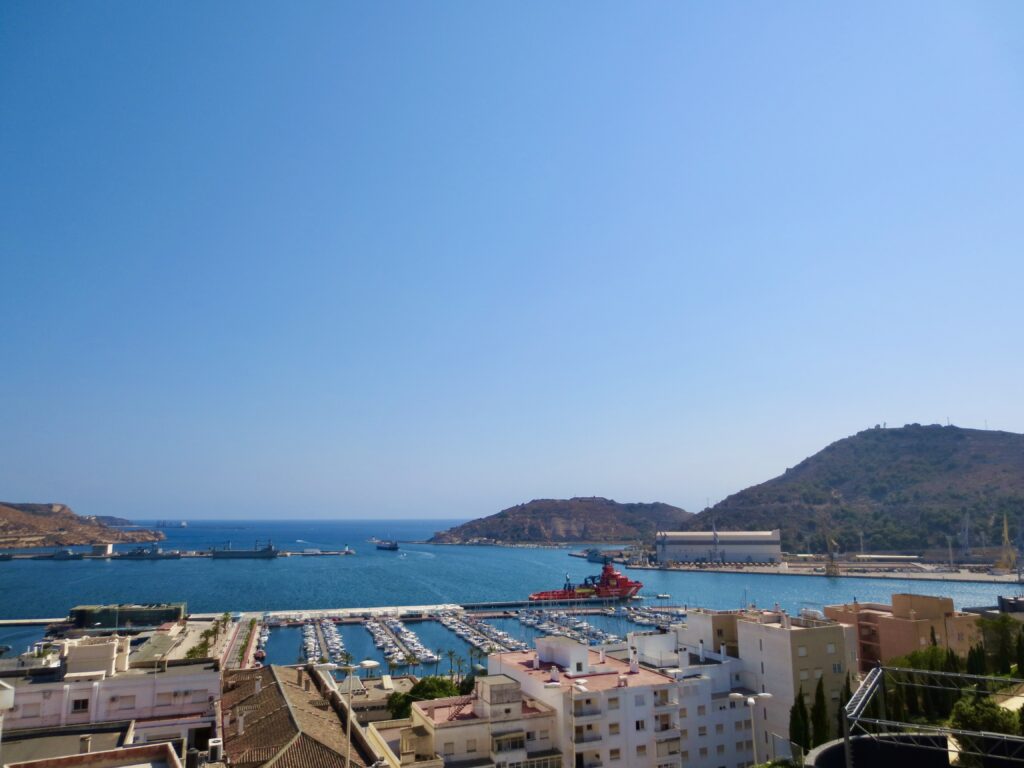
The harbor view is especially striking, with naval ships anchored in the bay—adding to the city’s identity as a maritime hub.
Why Cartagena Flourished as a “Naval City”
Looking out over the port near the Roman Theatre, you begin to understand why Cartagena has held historical importance.
This natural harbor has long been known as a “fortified port,” playing a significant role throughout Spanish history.
From the 16th to 18th centuries, Cartagena developed as one of Spain’s key naval bases.
In the 18th century, the reorganization of the Spanish Navy designated Cartagena as the center of the Mediterranean naval department.
Large shipyards and naval facilities (the Arsenal de Cartagena) were constructed during this time, making it a major military port supporting Spain’s naval power.
Ancient Roman ruins and the historic heart of Spain’s naval legacy standing side by side— that contrast is exactly what makes Cartagena so unique and fascinating.
Cartagena: A City Where “Roman Ruins × Naval Heritage” Come Together
Cartagena beautifully combines:
- grand Roman ruins
- its long history as a Mediterranean naval port
- scenic harbor views and colorful city streets
It truly feels like walking through an open‑air museum, where everything from ancient Rome to modern maritime history is layered around you.
With attractions scattered throughout the city and countless photogenic spots, Cartagena is perfect for travelers who want to explore a historic Spanish city at a relaxed pace.


コメント