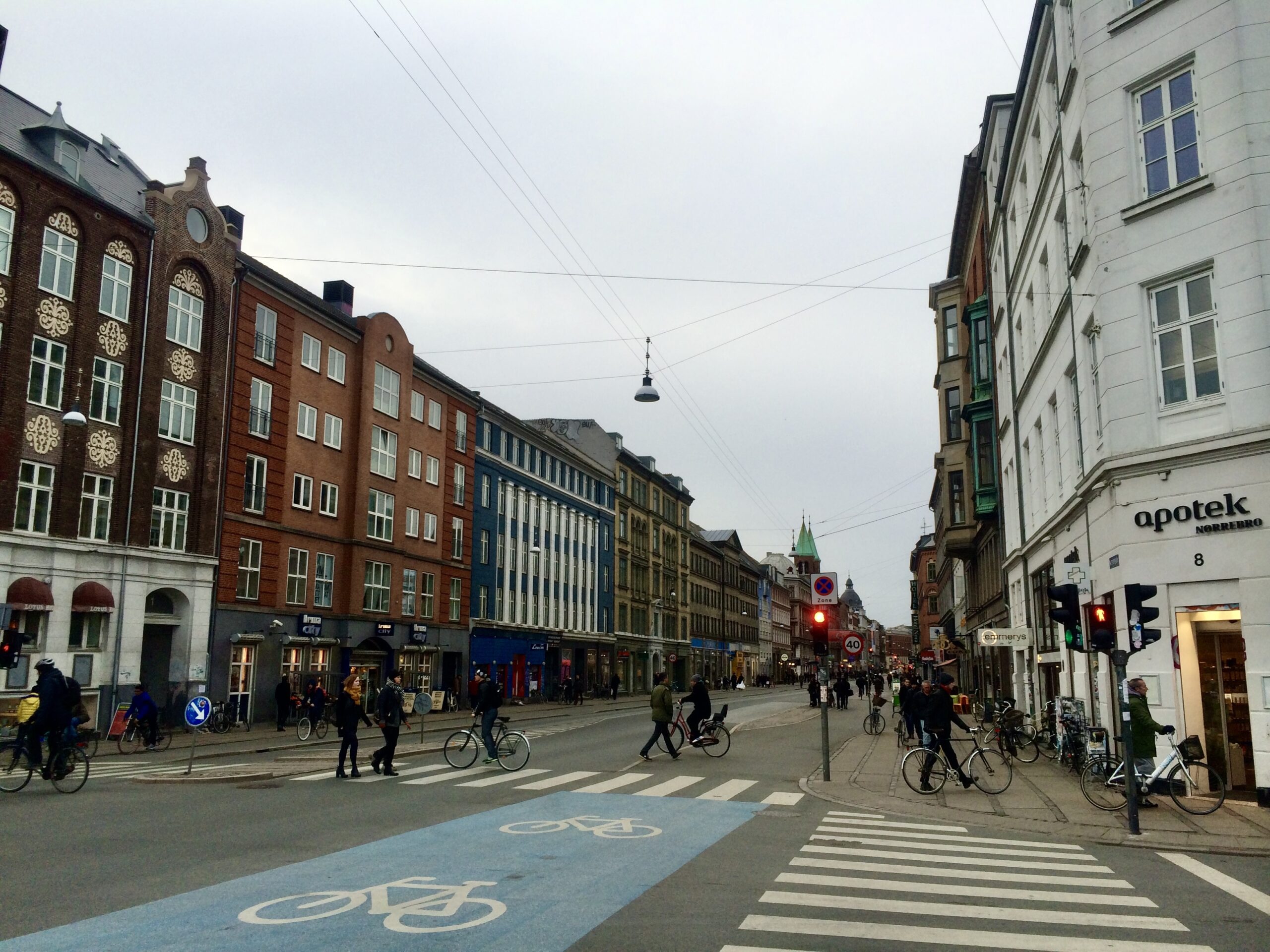
- April… Really? A Nordic “Spring” That Still Feels Like Winter (and What to Wear)
- A Food Paradise: TorvehallerneKBH and a Glass of Wine Like a Local
- Everyday Copenhagen in Nørrebro and a Walk by The Lakes
- “Mother and Death” at SMK—Another Side of the “Happiest Country”
- The Shock (and Quiet Prayer) of Natkirken: When a Church Opens at Night
- A City That Warms You Up Even When It’s Cold: Wrap-Up and Practical Tips
April… Really? A Nordic “Spring” That Still Feels Like Winter (and What to Wear)

This trip was in April. I arrived thinking it would be spring, and then immediately thought: “Wait… isn’t this just winter?”
You can’t underestimate a Nordic spring. The wind is cold, the sky is slightly overcast, and it’s simply… chilly. And yet, people in the city still seem genuinely happy to be outside. This time, instead of checking off famous sights, I spent a few days “living like a local,” guided by a friend—good food, a hip neighborhood, and a surprising experience at a church at night.
A Food Paradise: TorvehallerneKBH and a Glass of Wine Like a Local


My friend told me, “I know a great place for dinner,” and took me to TorvehallerneKBH, a glass-covered market right in front of Nørreport Station.
The moment you step inside, you’re surrounded by fresh bread, cheese, vegetables, seafood—everything. It really is “Copenhagen’s kitchen.” We grabbed seats at the counter of a Spanish bar inside the market called Tapa del Toro.
Spanish food in Denmark? It might sound unexpected, but the tapas here were excellent. Sipping wine while snacking on calamari and potatoes covered in aioli, soaking up the market’s energy—it was perfect. Looking around, locals were casually enjoying wine as part of their everyday shopping routine. This is exactly what I love: not a “tourist restaurant,” but a place where you can blend in and eat alongside locals.
Everyday Copenhagen in Nørrebro and a Walk by The Lakes

The next day, we headed to Nørrebro. I was told it’s one of Copenhagen’s most hip, multicultural areas. Along the main street you’ll find vintage shops, record stores, kebab places—everything feels lively and layered.

We also took a walk by the large lakes that sit on the edge of the area (The Lakes). The April wind was cold enough that I needed a down jacket. And yet, locals didn’t seem to care—sitting on benches with coffee, chatting with a beer in hand. We walked around the lakes too. It’s not a major tourist attraction, but honestly, this might have been the moment when I felt “everyday Denmark” the most.

We also ran into a cat.

For lunch, we went to a pizza place in Nørrebro that my friend recommended. I don’t remember the name—does it still exist? Either way, pizza after a long walk tasted incredible.
“Mother and Death” at SMK—Another Side of the “Happiest Country”

“Mother and Death” (Døden og Moderen) by Niels Hansen Jacobsen—one of the most famous sculptures at the National Gallery of Denmark (SMK). It’s said to be inspired by a fairy tale by Hans Christian Andersen.
I was surprised that art from the “happiest country in the world” could depict death and despair so vividly, so rawly.
The Shock (and Quiet Prayer) of Natkirken: When a Church Opens at Night
That night, my friend said, “There’s an interesting place I want to show you,” and took me to Vor Frue Kirke (Church of Our Lady) in the city center. I expected a traditional church—so the moment I stepped inside, I was speechless.

The Christ statue above the altar was lit in an almost eerie way, and electronic music echoed through the space. It felt more like a club—or a contemporary art event—than a church.
This was part of an initiative called Natkirken (“Night Church”). According to my friend, the idea started as a way to help younger people feel more connected to Christianity and churches, using a different style and atmosphere. It wasn’t about drinking or partying—more like a quiet space to face yourself, wrapped in sound.
Holding onto tradition while also welcoming new culture with flexibility—maybe that balance is Copenhagen’s true charm.
A City That Warms You Up Even When It’s Cold: Wrap-Up and Practical Tips
April in Copenhagen was definitely cold, but the delicious food at the market, the lakeside walk with a friend, and the church’s unexpected new approach—those experiences carried a kind of warmth. There’s a wisdom here: turning cold into something you can still enjoy, and meeting new ideas with openness.
If you’re visiting Copenhagen in early spring, pack properly for the cold. And instead of clinging too tightly to a guidebook, try putting it down for a while—wander into a market, get lost in the streets of Nørrebro, and see what kind of “everyday Copenhagen” you find.

コメント