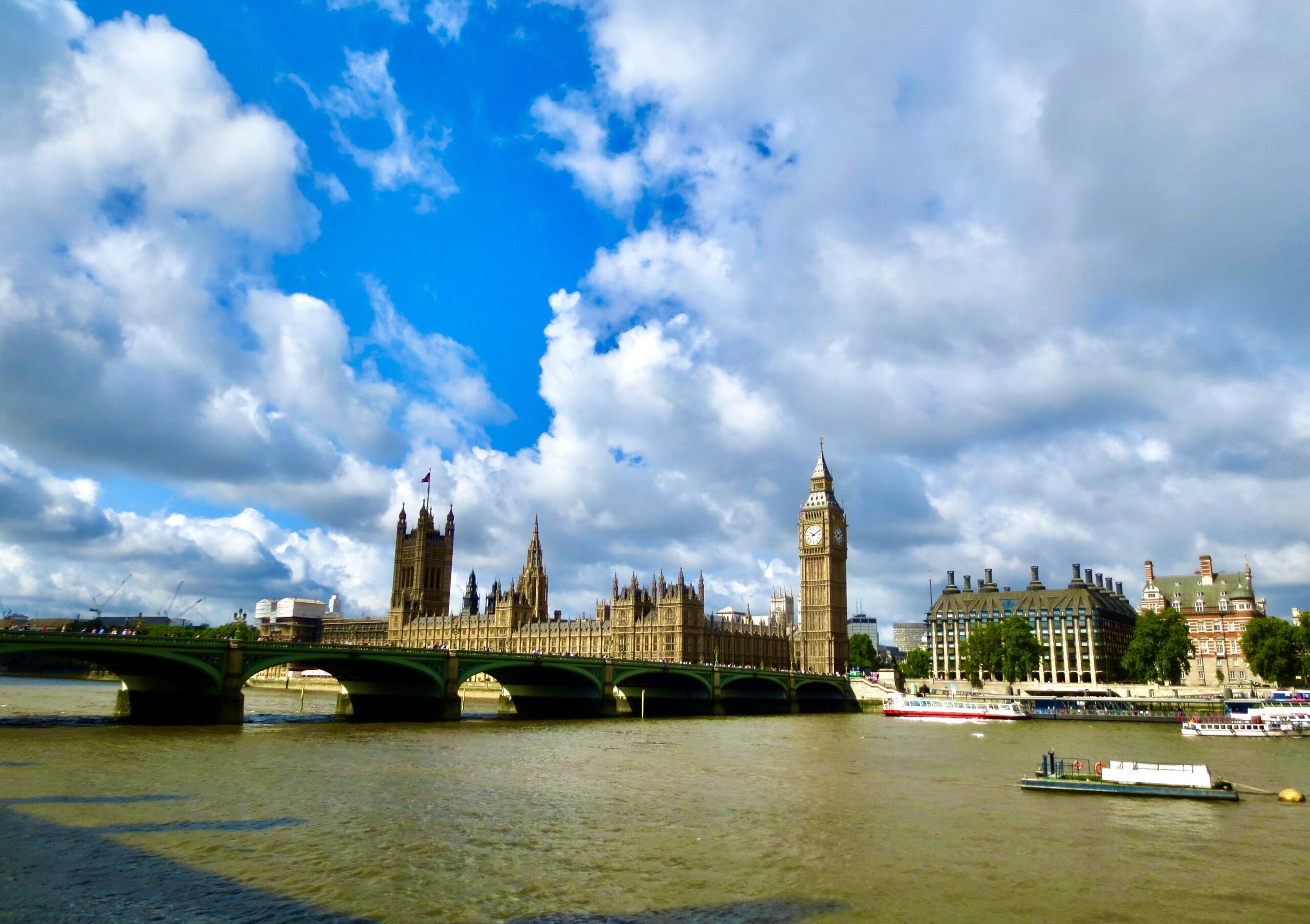
On the second morning I boarded a Thames River Cruise and let London come to me.
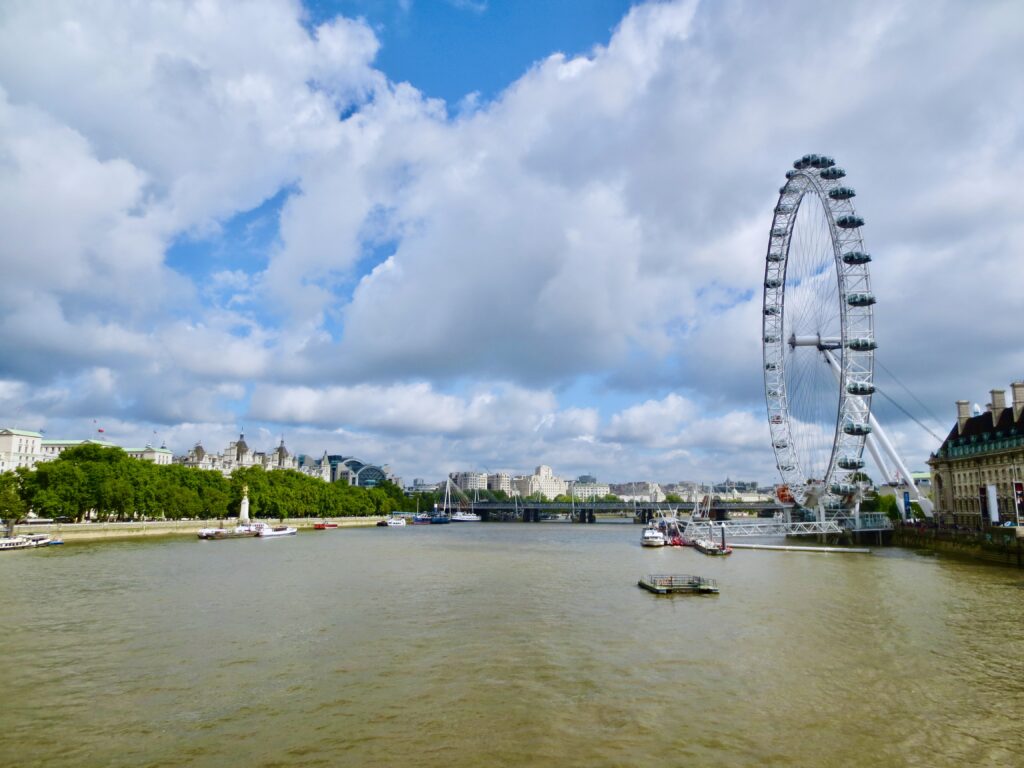
There’s something disorienting about seeing a familiar city from the water. The same buildings you walked past the day before take on an entirely different quality — more cinematic, somehow more real. The sky had cleared overnight, and the Thames glittered in a way that made the previous day’s grey clouds feel like a distant memory.
Thames River Cruise: London From the Water
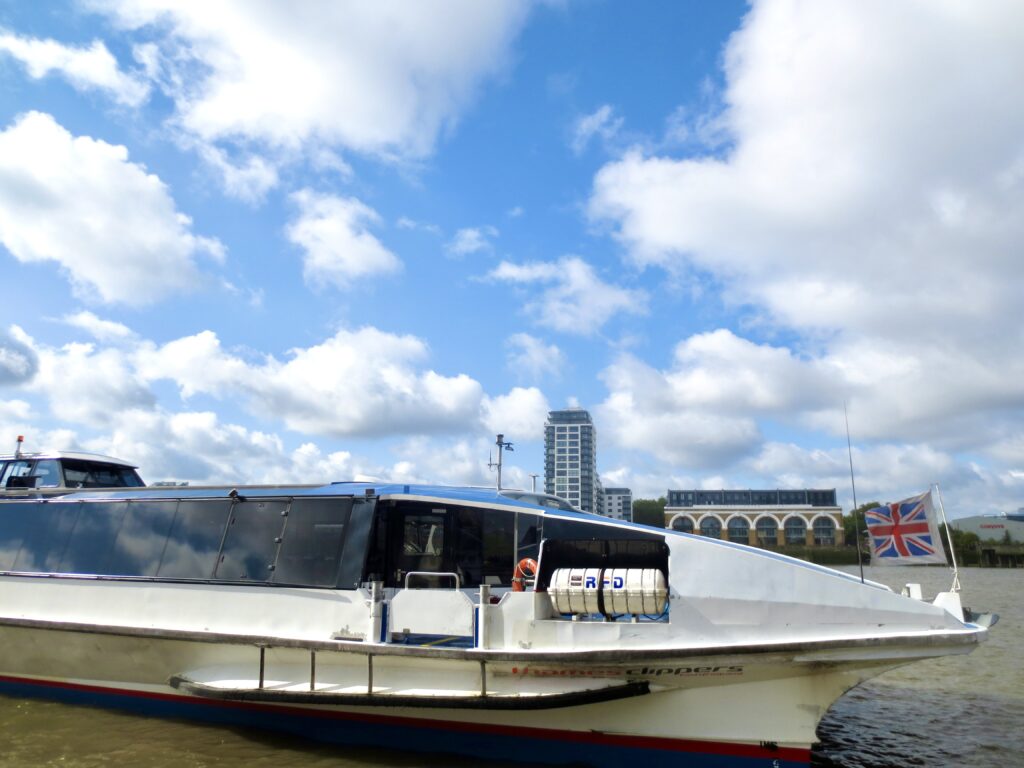
Blue skies, a steady river breeze, and the Thames lit up like something out of the Mediterranean.
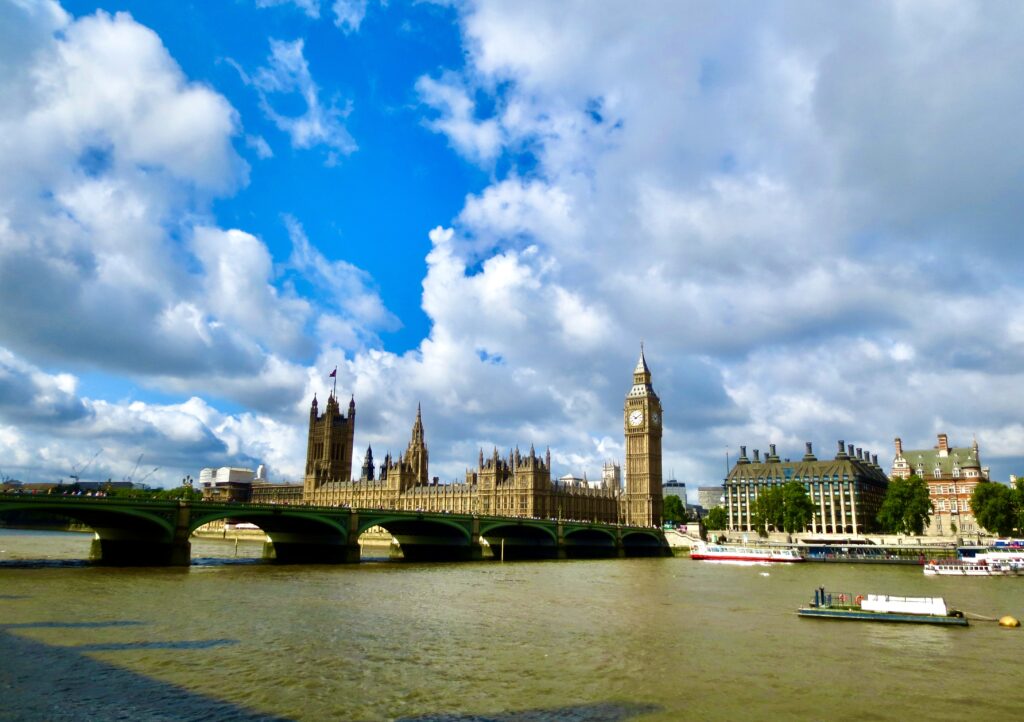
The undeniable highlight of the cruise is the approach to the Houses of Parliament and Big Ben. Drifting towards that silhouette from the water — the clock tower rising above the riverbank, the Gothic stonework reflected below — is the kind of view that makes you understand why London has been painted and photographed for centuries. The London Eye came into frame shortly after, completing a skyline that feels almost too iconic to be real.
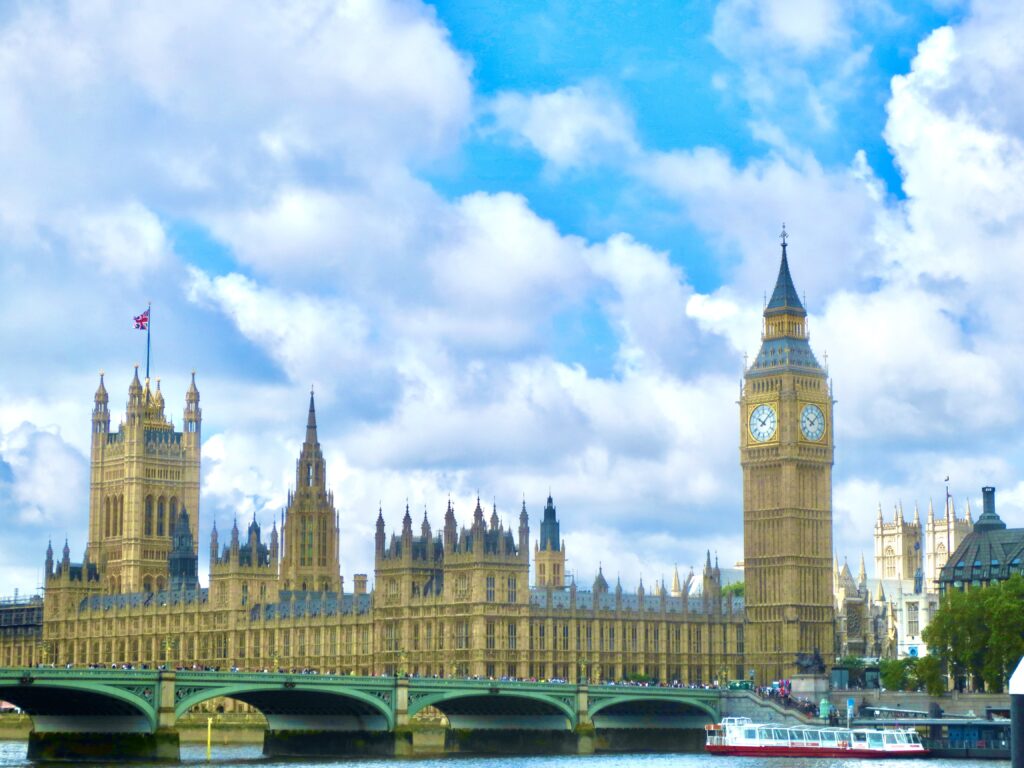
This isn’t just a way to get from A to B. The cruise is an experience in its own right.
Buckingham Palace and Hyde Park
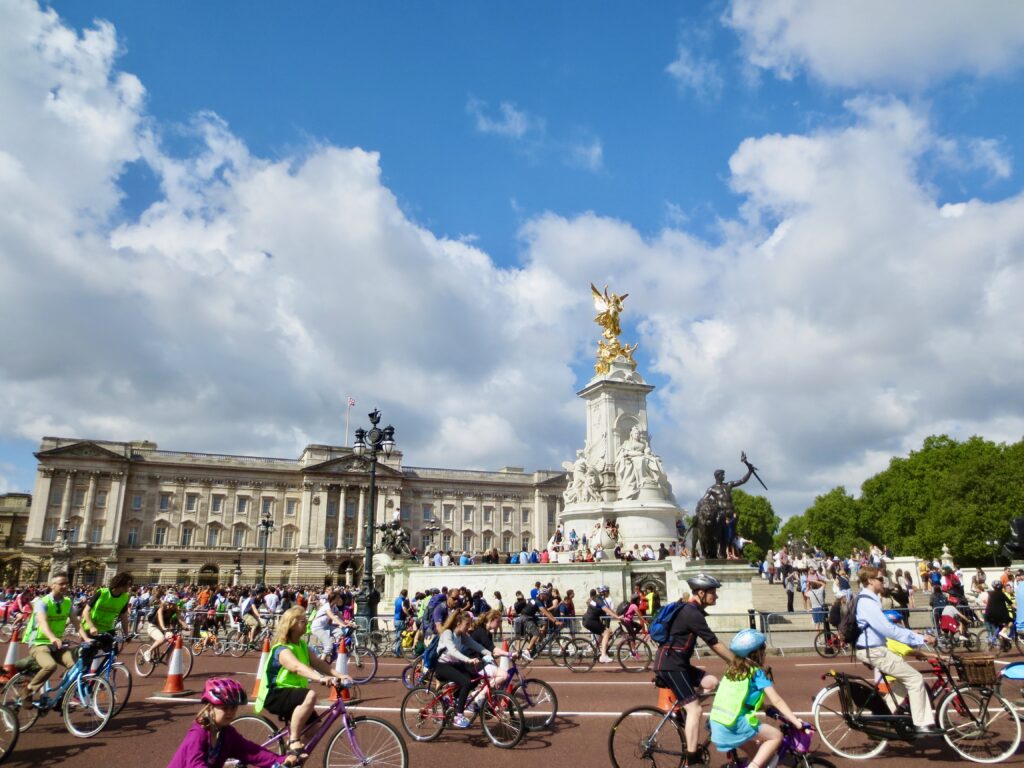
Stepping off near Buckingham Palace, I stumbled into a cycling event — a stream of brightly coloured riders weaving past the palace gates. These unplanned moments are often what stays with you longest.
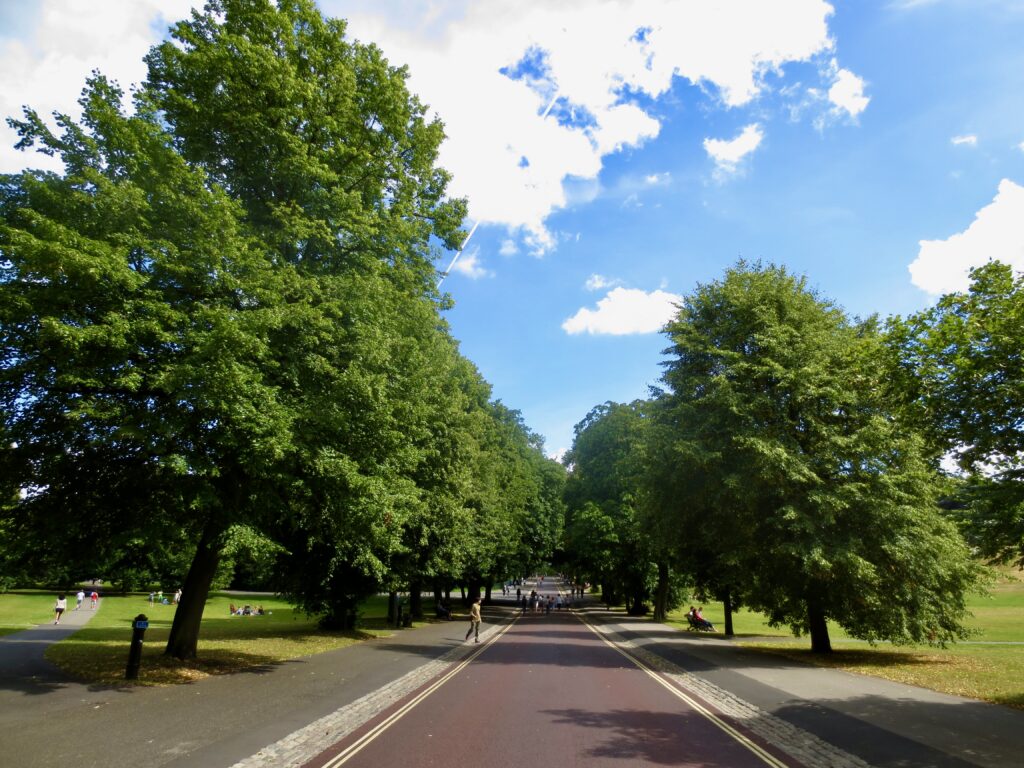
Hyde Park came next, and the contrast with the busy streets was immediate. A long green tunnel of trees, dappled light, near silence. After a morning of sightseeing, it was exactly the kind of pause the day needed.
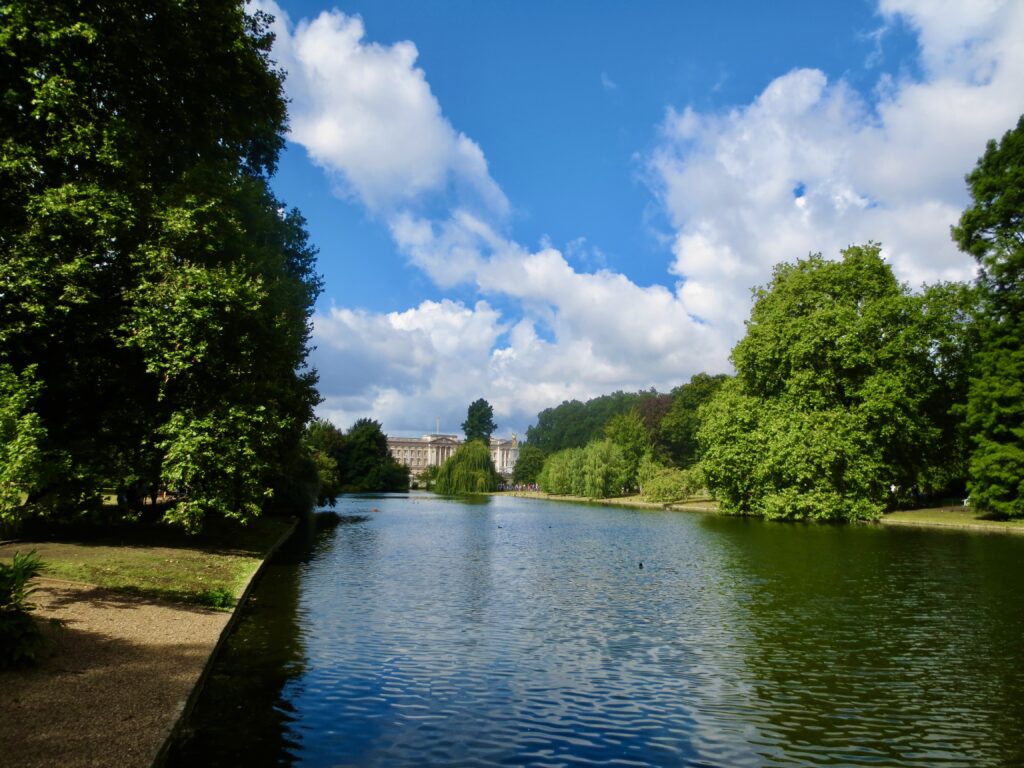
Greenwich Observatory: Where the World’s Time Begins
The cruise ends at Greenwich — the town that gave the world its clock.
The Royal Observatory sits on a hill above a sweep of parkland, and the atmosphere up here is noticeably quieter than central London. It feels like a place that takes itself seriously, in the best possible way.
The Shepherd Gate Clock

At the entrance stands the Shepherd Gate Clock, a 24-hour timepiece that has been ticking since the 19th century. This was once the mechanism by which accurate time was broadcast to the world. Standing in front of it, that history doesn’t feel abstract — it feels immediate.
The Courtyard and Meridian Line
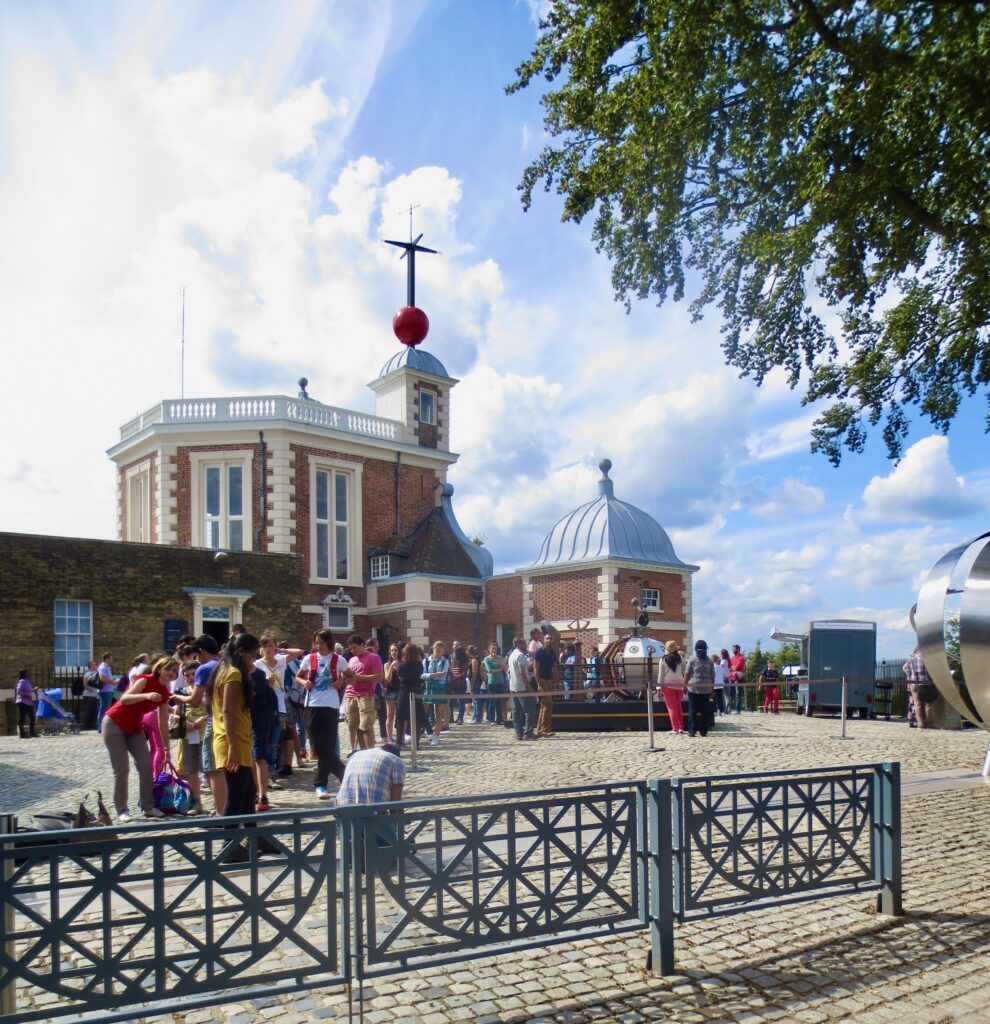
Inside the courtyard, the red Time Ball tower dominates, surrounded by astronomical instruments and displays that amount to a condensed museum of scientific history. The contrast with the open blue sky above made for some of the best photographs of the trip.
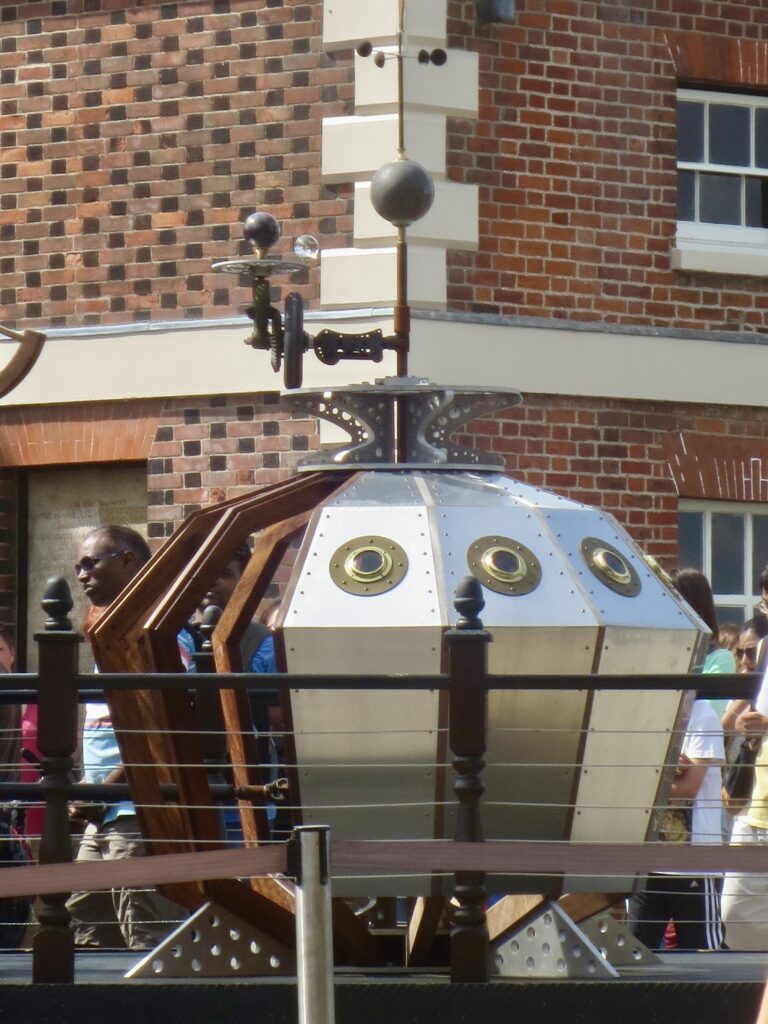
One instrument in particular caught my eye: a mechanical observing device combining metal and aged wood in a design that wouldn’t look out of place in a steampunk novel. The fact that it sits inside a centuries-old institution only makes it stranger and more compelling.
The View From the Hill
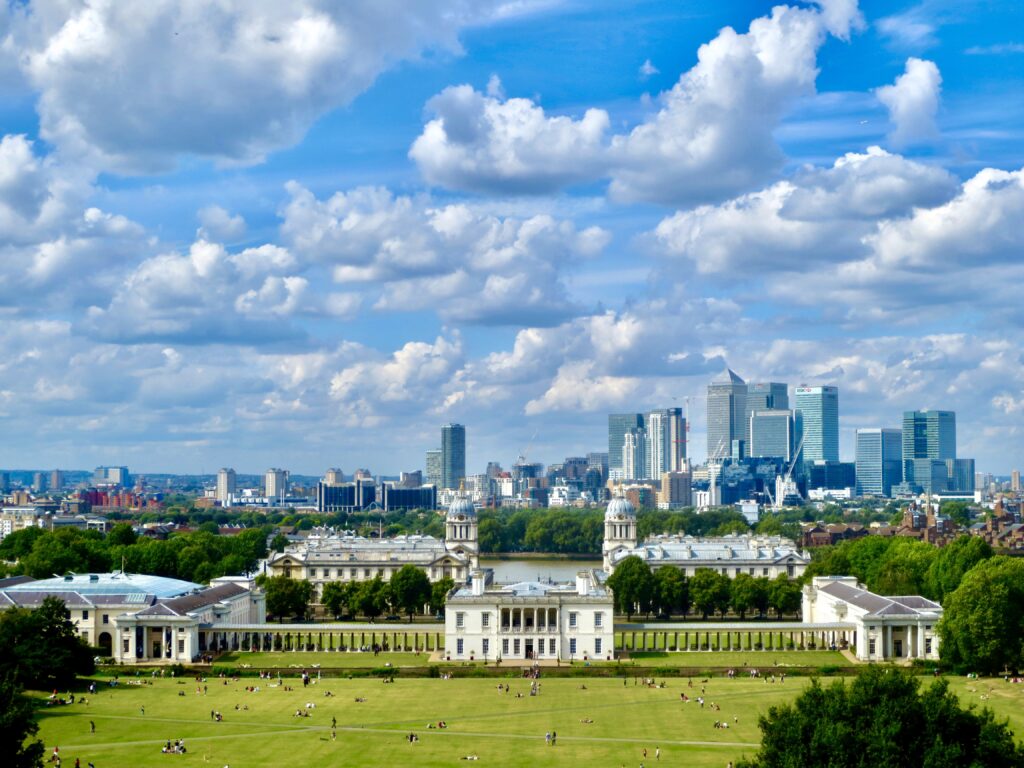
Greenwich’s most celebrated sight is the panorama from the hilltop. Spread out below: the classical colonnades of the Old Royal Naval College, the curve of the Thames, and beyond it the glass towers of Canary Wharf catching the afternoon light. Four hundred years of London architecture in a single frame. It’s the kind of view that stops conversation.
The Old Royal Naval College and the Cutty Sark
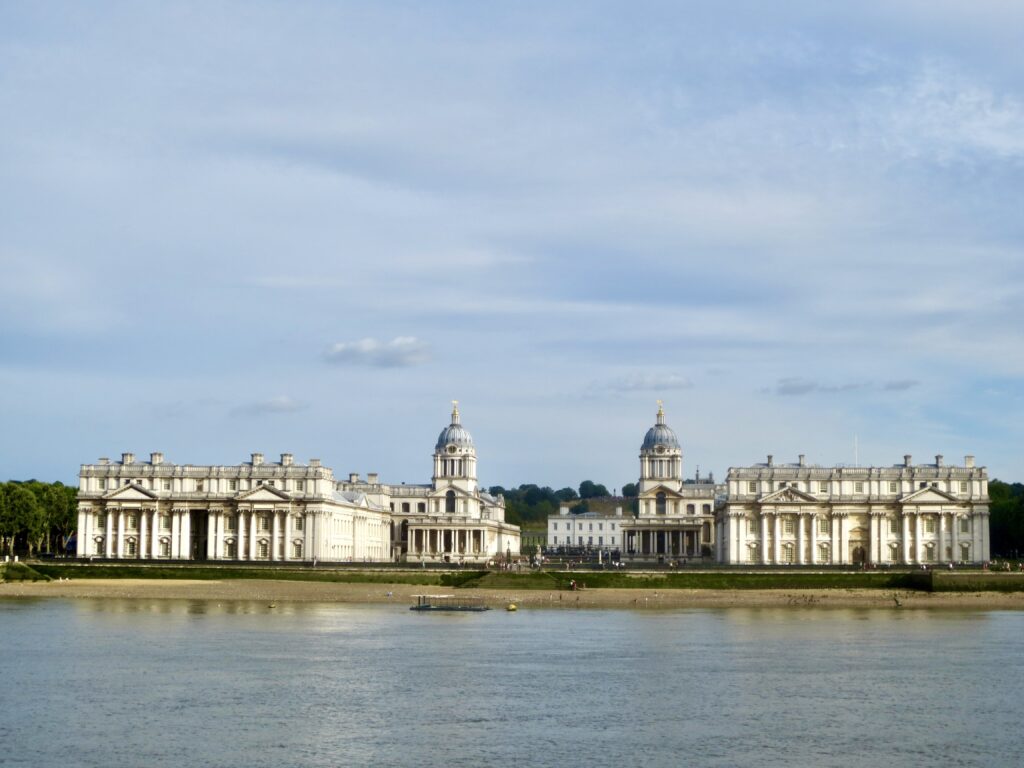
Back at river level, the Old Royal Naval College commands the waterfront with the quiet authority of a building that knows exactly what it is. White stone, grand arches, heavy columns — it has the look of a film set, which is perhaps why it so frequently appears in one.
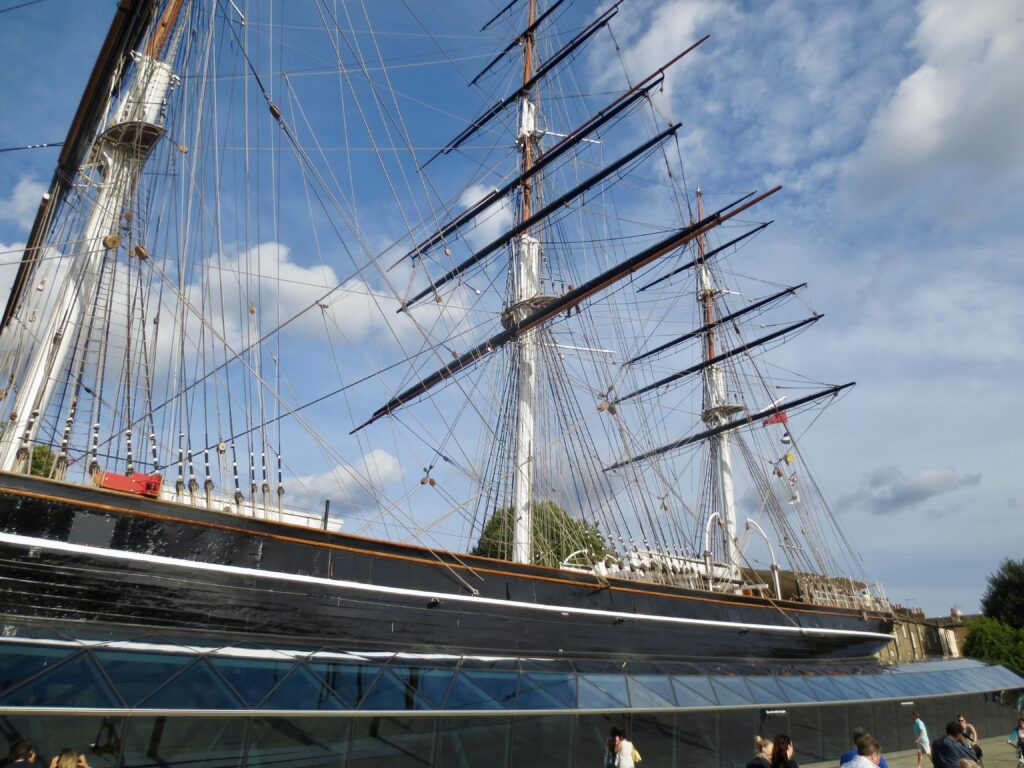
Nearby, the Cutty Sark announces itself before you’ve properly seen it. Masts reaching upward, rigging traced against the sky, a black hull that seems to absorb light. The 19th-century tea clipper has been preserved in a purpose-built enclosure, its hull suspended above a glass floor that lets you walk beneath the ship itself. It’s an unusual approach, and it works — the combination of Victorian engineering and contemporary museum design feels entirely at home in Greenwich.
Greenwich: A Summary
Greenwich is, in essence, a town where time, the sea, and science have all left their mark — and where you can feel each of them on the same afternoon. It operates at a different pace from central London, and rewards the visitor who takes the time to slow down with it. If you’re spending two days in London, make the journey. It’s worth every minute.
Two Days in London
The Tower of London. Big Ben from the river. The evening skyline at Canary Wharf. The panorama from Greenwich Hill.
Each one a different London, all of them the same city. Like Madrid before it, London turns out to be a place that reveals itself in layers — and two days, as it happens, is just enough time to want more.


コメント