
About 30 kilometers south of Invercargill lies Bluff — New Zealand’s southernmost port town, and the end of the road in every sense.
I got there by pre-booked taxi, about 30 minutes from the city center. If you have a car, it’s straightforward. If not, a taxi is your only real option — there’s no bus service, and you’ll need to arrange a return pickup in advance. My driver dropped me off with a brisk “I’ll be back at [time]” and drove away, leaving me wondering if I’d just been abandoned at the bottom of the world. He came back, for the record.
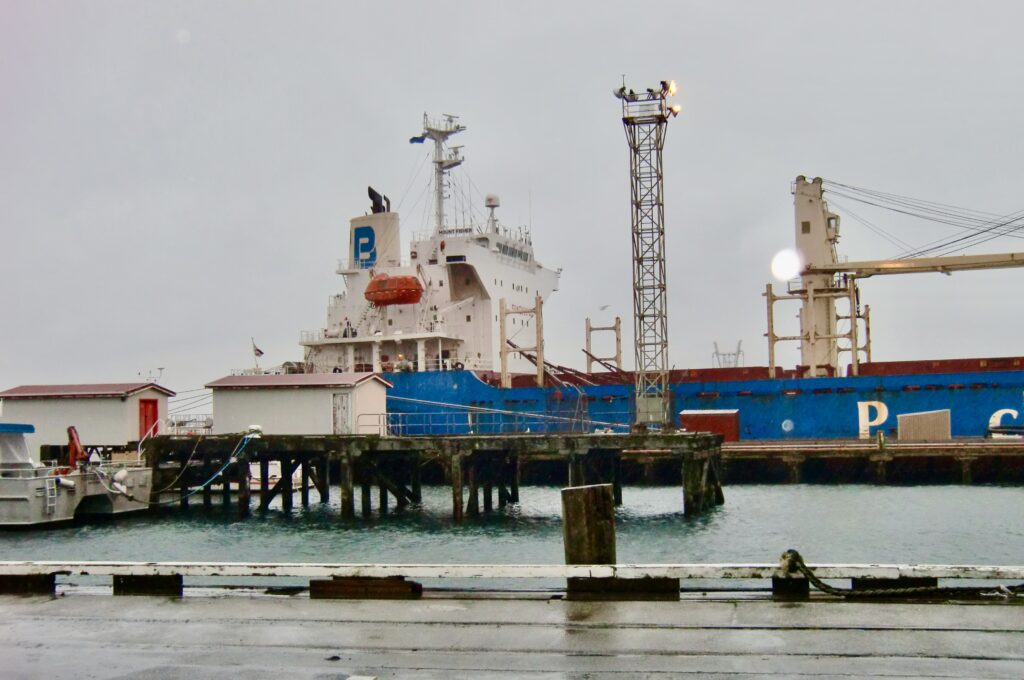
Bluff is one of New Zealand’s oldest European settlements and is known as the southern terminus of the country — the point where the land finally runs out. My main target: Stirling Point, the iconic signpost that draws visitors from all over the world. (The actual southernmost city on earth is Ushuaia, in Argentina’s Tierra del Fuego — but Bluff holds its own as a place that genuinely feels like the edge of something.)
It was overcast when I arrived, but the grey sky suited the place. If anything, it made the rawness and solitude of the landscape feel more honest.
- Bluff Heritage Trail: History Before You’ve Even Taken a Step
- The Signpost at the End of the World
- The Lighthouse and the Wild Southern Sea
- Bluff as a Working Port Town
- The Rainforest Trail: A Hidden Highlight
- Green-Lipped Mussels: The Meal That Delivered
- About the Oysters — A Confession
- Final Thoughts: The View from the Edge
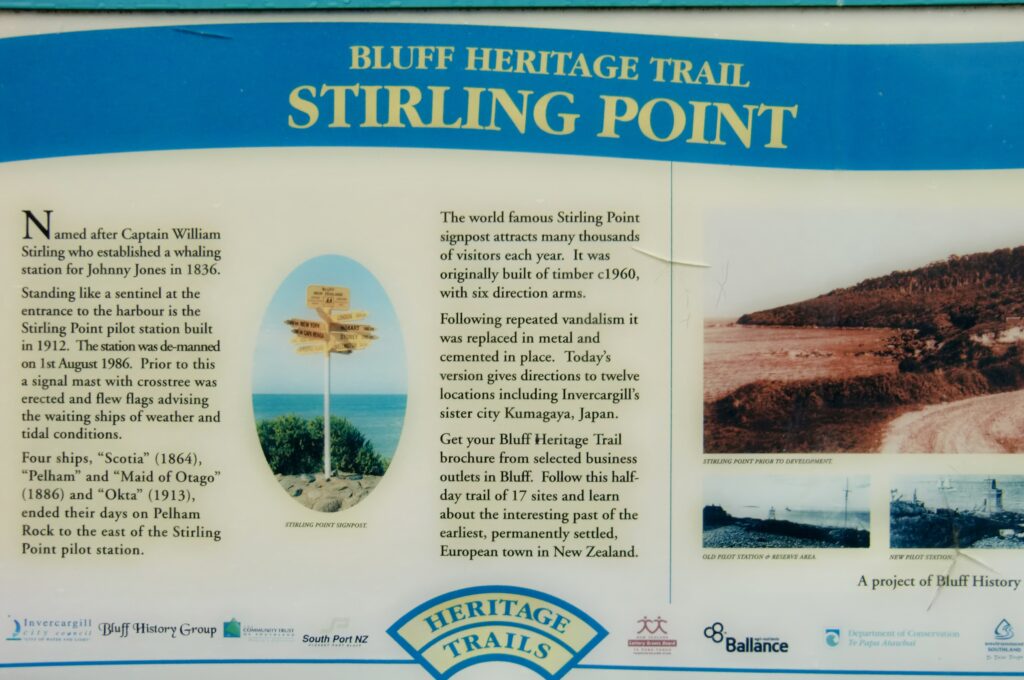
Bluff Heritage Trail: History Before You’ve Even Taken a Step
The first thing you encounter is the Bluff Heritage Trail information board — a detailed account of a town built around whaling, fishing, and the sea. What caught my attention was the history of the Stirling Point signpost itself: how it was installed, damaged, and rebuilt multiple times over the years until it became the structure standing today. Even the signpost has a story.
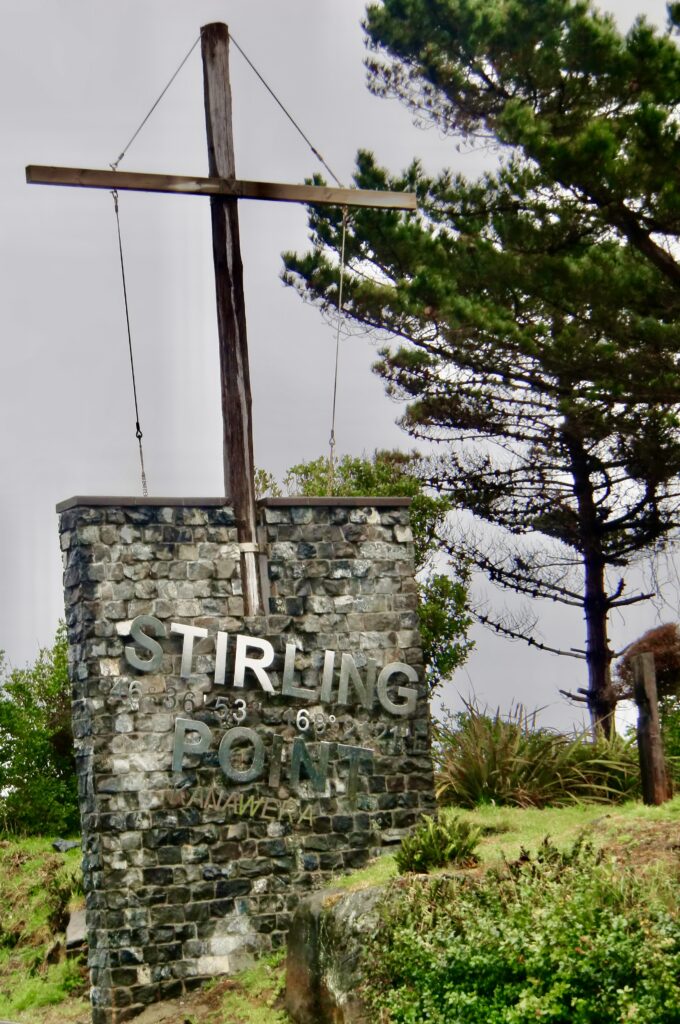
The Signpost at the End of the World
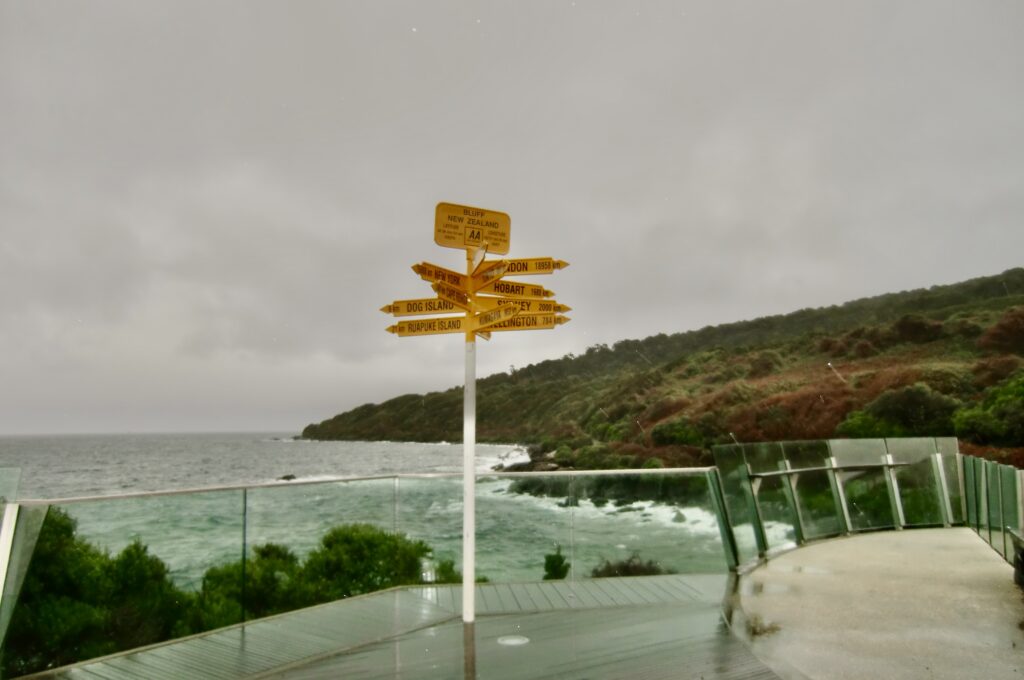
The yellow distance marker at Stirling Point is the centerpiece of any Bluff visit. Here’s what the signs read:
- London: 18,958 km
- Tokyo: 9,567 km
- Kumagaya (熊谷): 9,632 km ← yes, really
- Cape Reinga: 1,401 km (NZ’s northern tip)
- Dog Island: 6 km (very local energy)
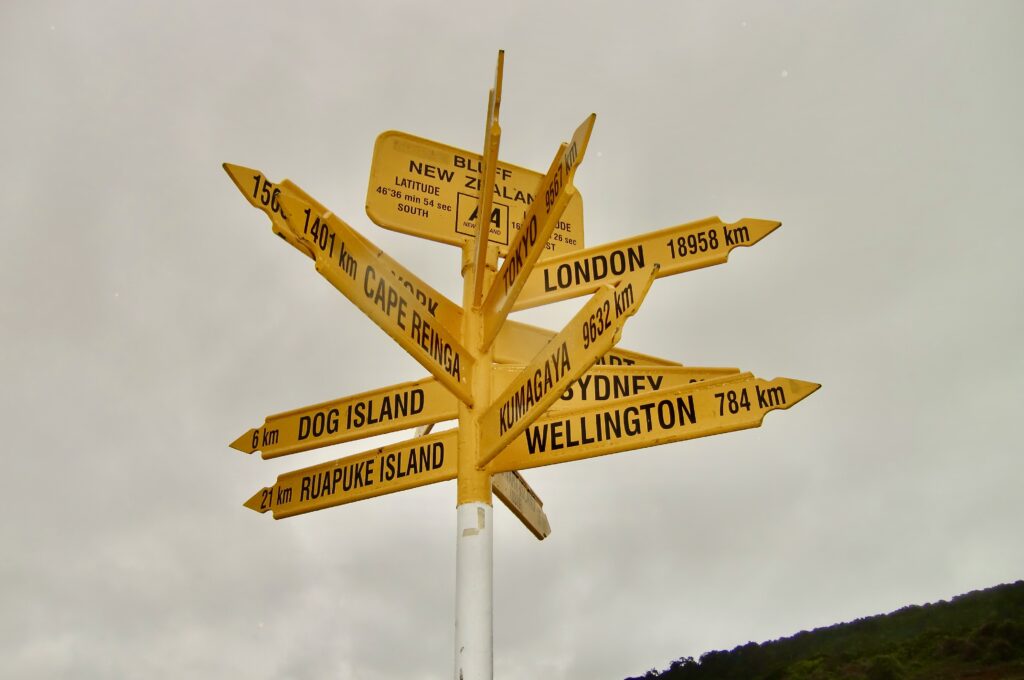
Standing in front of it, the numbers hit differently than they do on a screen. You start doing the math in your head and the distances become visceral. As for why Kumagaya — a city in Saitama Prefecture — appears on a signpost at the bottom of New Zealand: it’s Invercargill’s sister city. Why Kumagaya? Your guess is as good as mine.
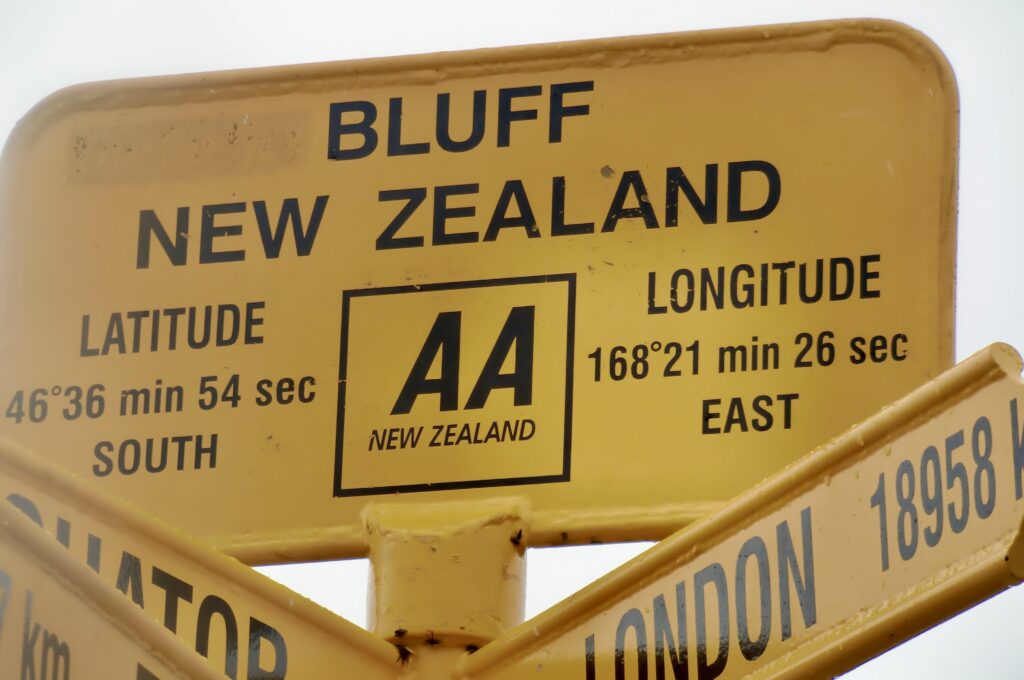
The latitude here is 46°36’S. It was August — the height of the Southern Hemisphere winter — and genuinely, memorably cold.
The Lighthouse and the Wild Southern Sea
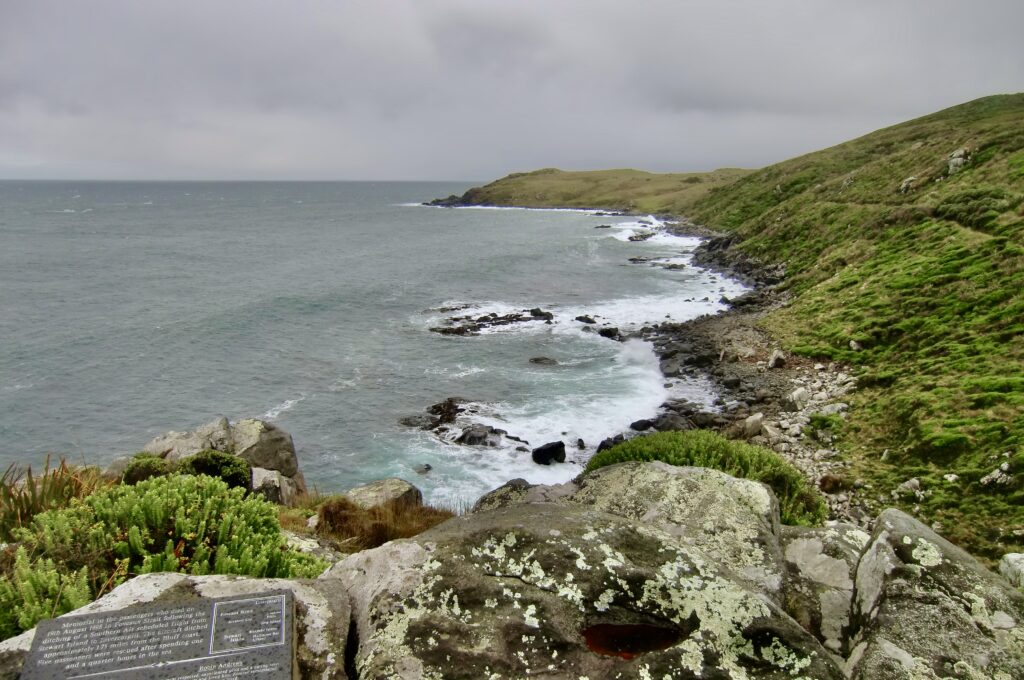
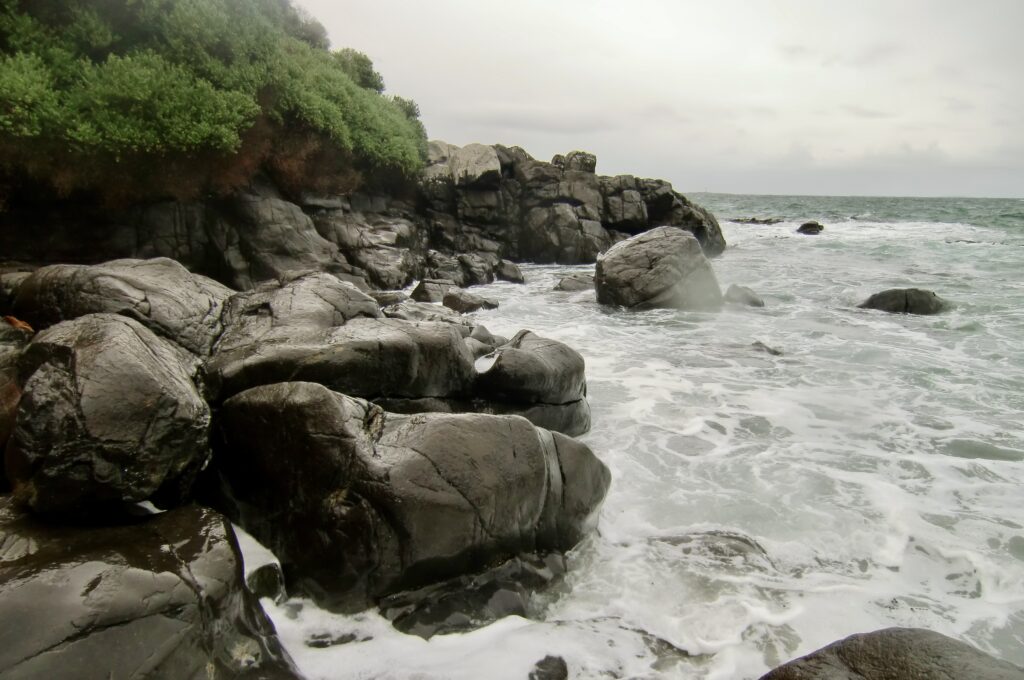
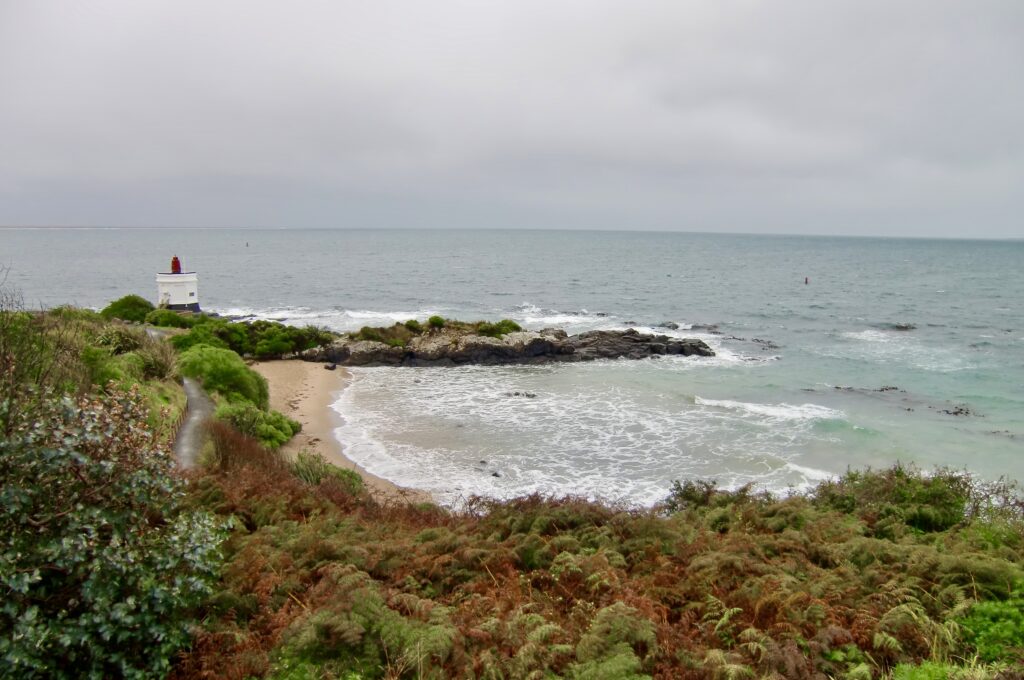
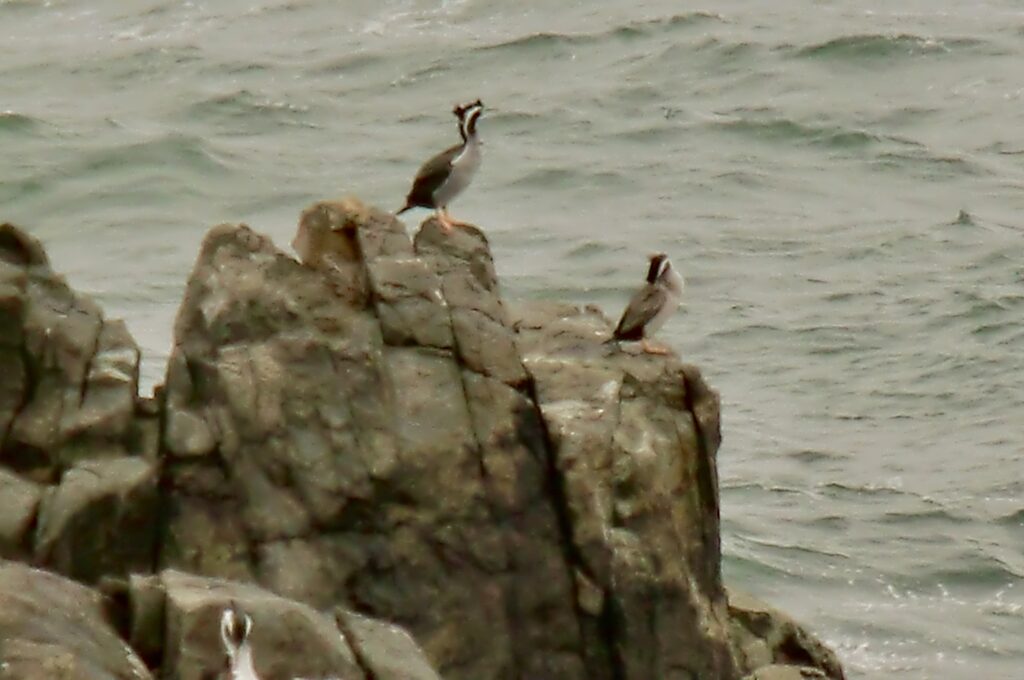
From the viewing platform beside the signpost, the sea opens up in front of you — dark, wind-raked, and absolutely vast. There’s a small white lighthouse in the distance, so quiet and small against the seascape that it barely registers at first, and then becomes the thing your eye keeps returning to. Despite the winter conditions, the water held a faint turquoise tint that reminded me of photographs I’d seen of the Scottish and Irish coasts. Rugged but beautiful in a way that’s hard to manufacture.
Bluff as a Working Port Town

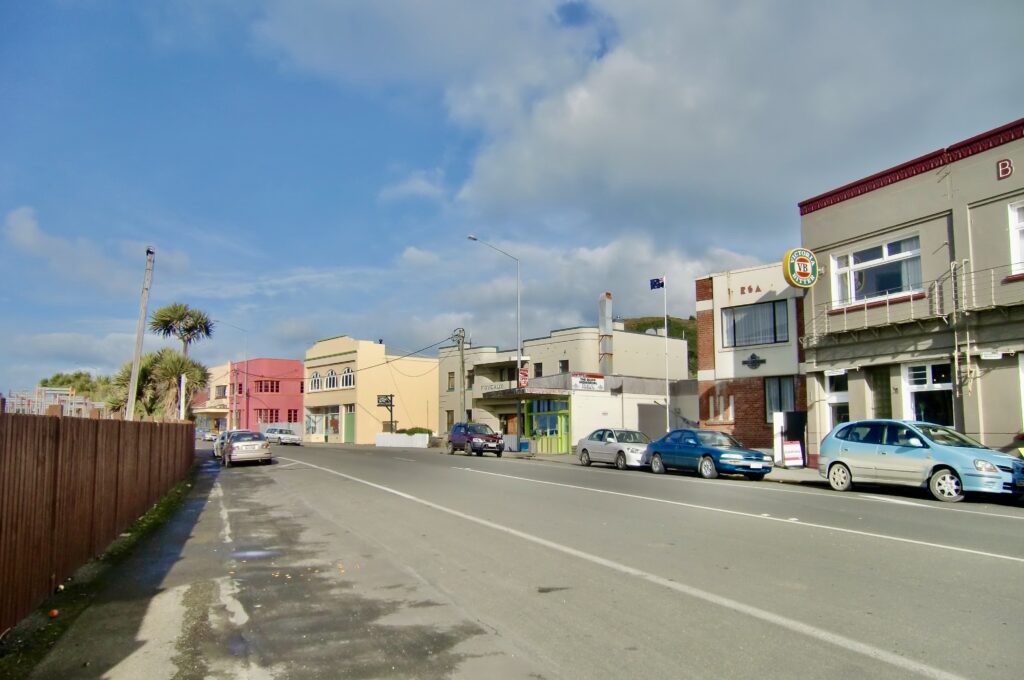
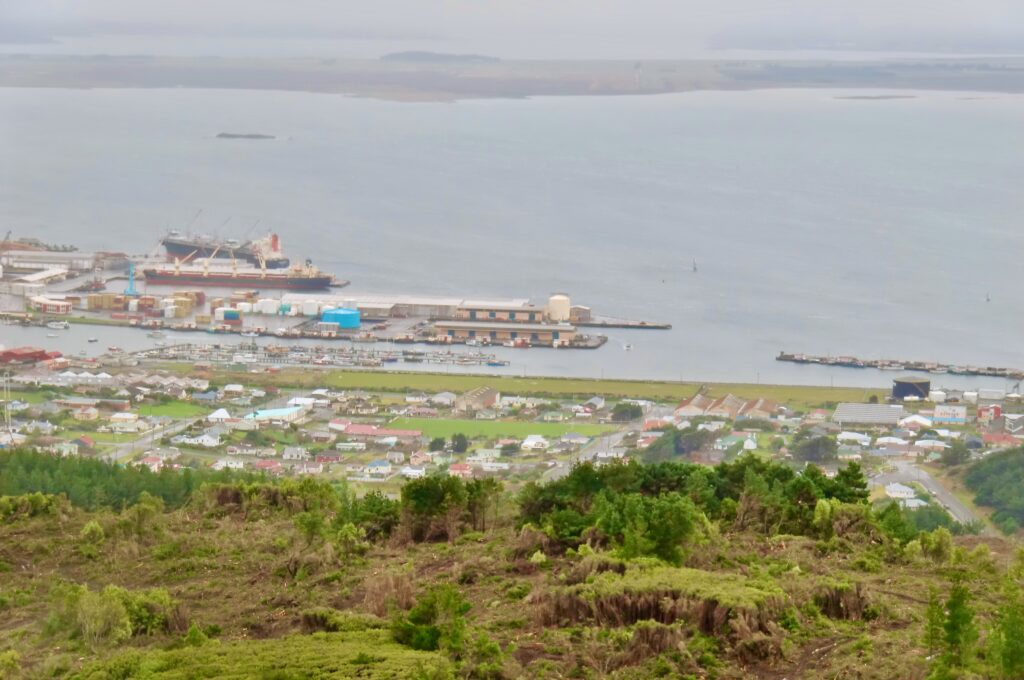
From the hillside, the town below looks modest and unassuming: a scattering of small houses, a working harbor, cargo vessels, the occasional mechanical clang of a crane. Bluff isn’t performing for tourists. It’s a functioning port with its own rhythms, and that ordinariness is part of its appeal. There’s something grounding about being in a place that exists for reasons other than your visit.
The Rainforest Trail: A Hidden Highlight

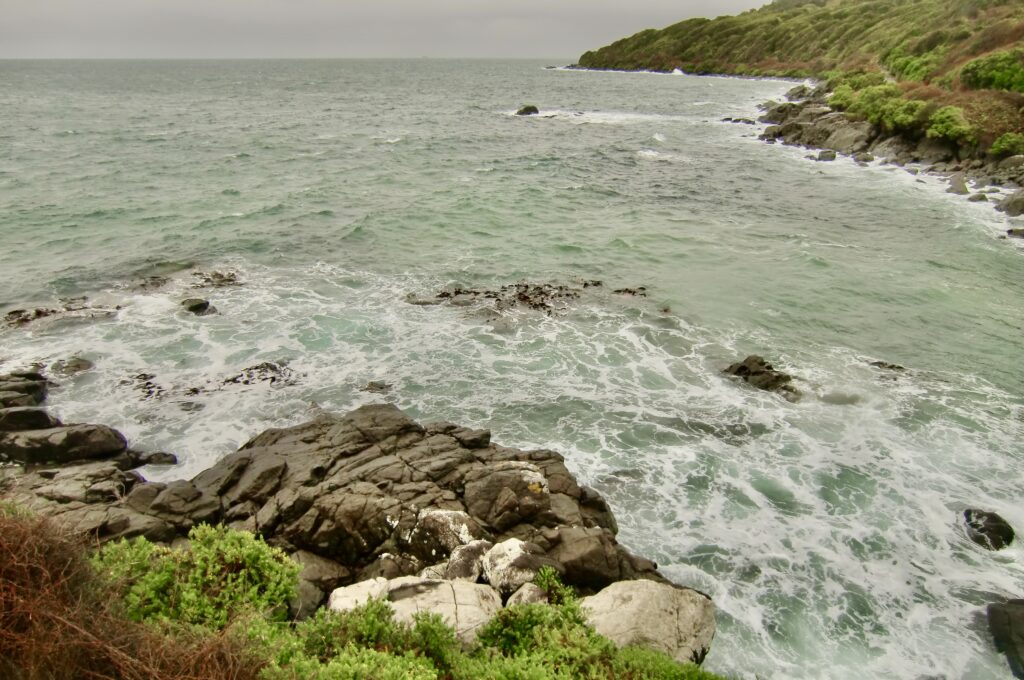
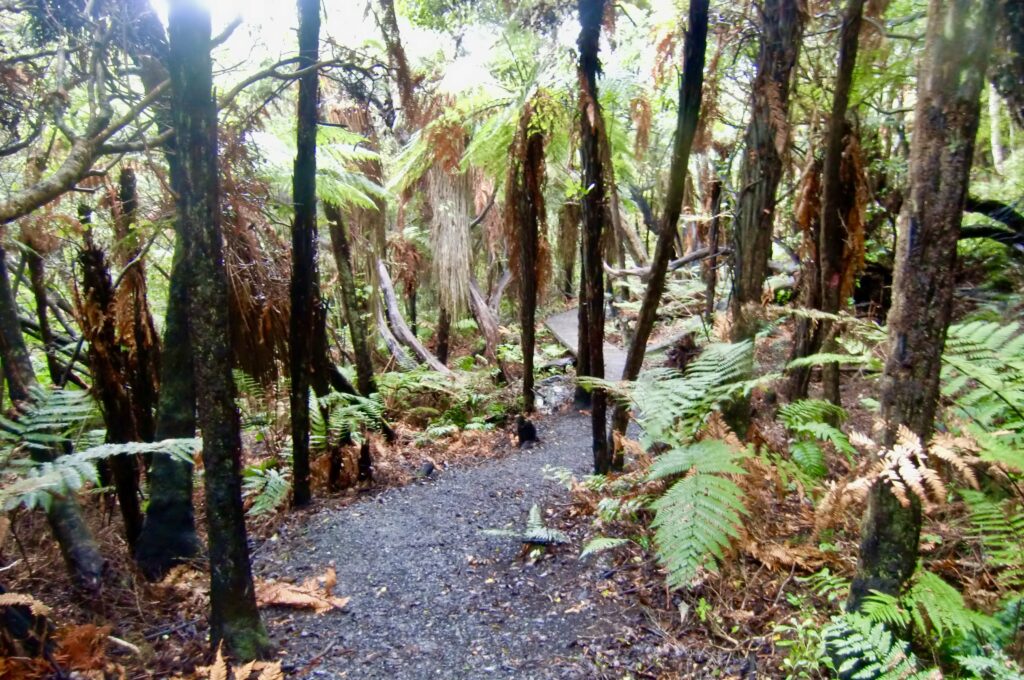
Most people associate Bluff with the signpost, but the coastal walking trail through native bush is quietly spectacular. The path winds through the kind of forest that feels specifically New Zealand: dense ferns, gnarled and twisted trees, damp earth underfoot, wooden boardwalks and staircases threading through the undergrowth. It feels like the set of a film you haven’t seen yet. Every few minutes the bush opens onto the coast — black volcanic rock, breaking waves — then closes again. Forest, then sea, then forest. It’s one of the more surprising walks I’ve done in the country.
Green-Lipped Mussels: The Meal That Delivered

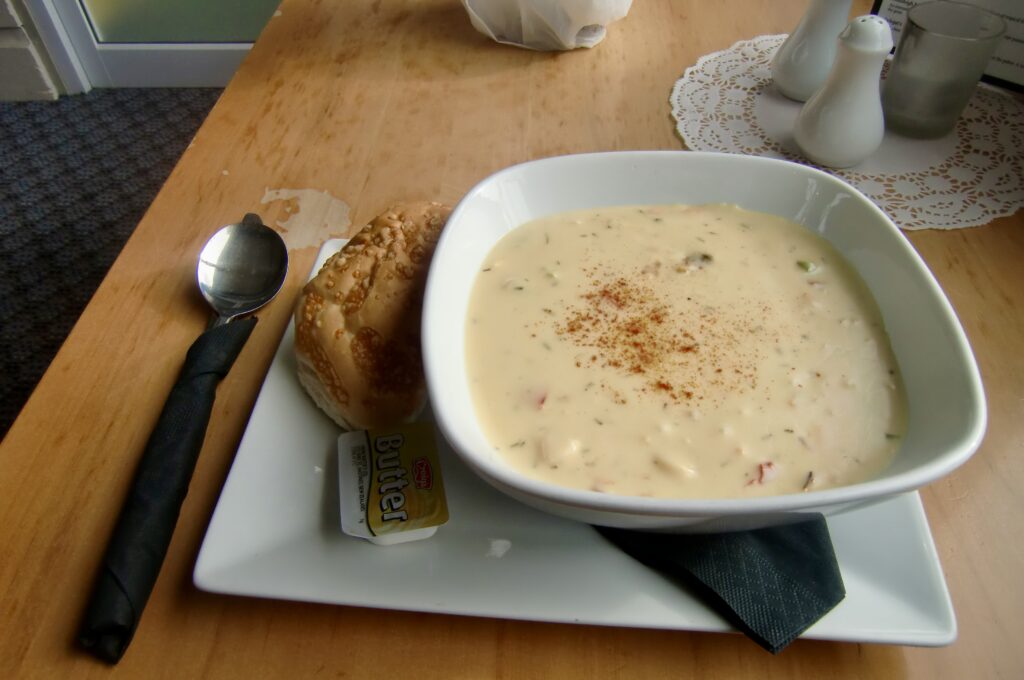
After the walk, I ordered Green-lipped Mussels — one of Bluff’s signature dishes — and they were exceptional. Vivid green shells, plump and tender flesh, sautéed with garlic, white wine, and tomato. The accompanying soup, thick and briny like a refined clam chowder, was just as good. If you’re visiting Bluff, this is non-negotiable.
About the Oysters — A Confession
You may be wondering what happened to the Bluff oysters, the whole reason I came here. The short answer: I missed the season. August is the tail end of the harvest window (May through August), and the restaurants had already stopped serving them.
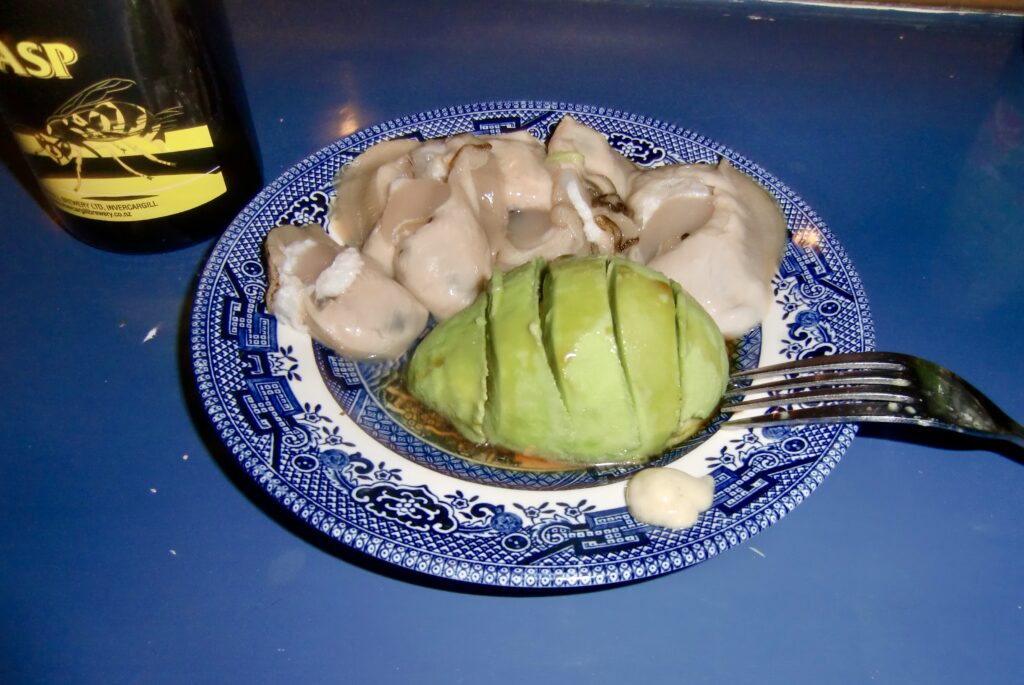
I wasn’t ready to give up entirely, so I bought some at a supermarket and ate them back at my accommodation — inexplicably paired with avocado. A friend looked at the photo and said “that’s disgusting.” She wasn’t entirely wrong. The oysters were large and fresh, but the experience didn’t leave the impression I’d hoped for. My honest read: Bluff oysters at peak season, in a proper restaurant, are probably a different thing entirely. I’m planning to come back in May or June and find out.
Final Thoughts: The View from the Edge
Bluff is small, unhurried, and easy to underestimate. But it offers things that bigger, more polished destinations can’t: a signpost that makes you feel the actual scale of the world, a coastline that hasn’t been tidied up for anyone, a forest trail that surprises you, and seafood that tastes like the cold clean water it came from. If you’re traveling the South Island and have a spare day near Invercargill, make the trip. Next up: Christchurch, visited just before the 2011 earthquake changed it forever.

コメント