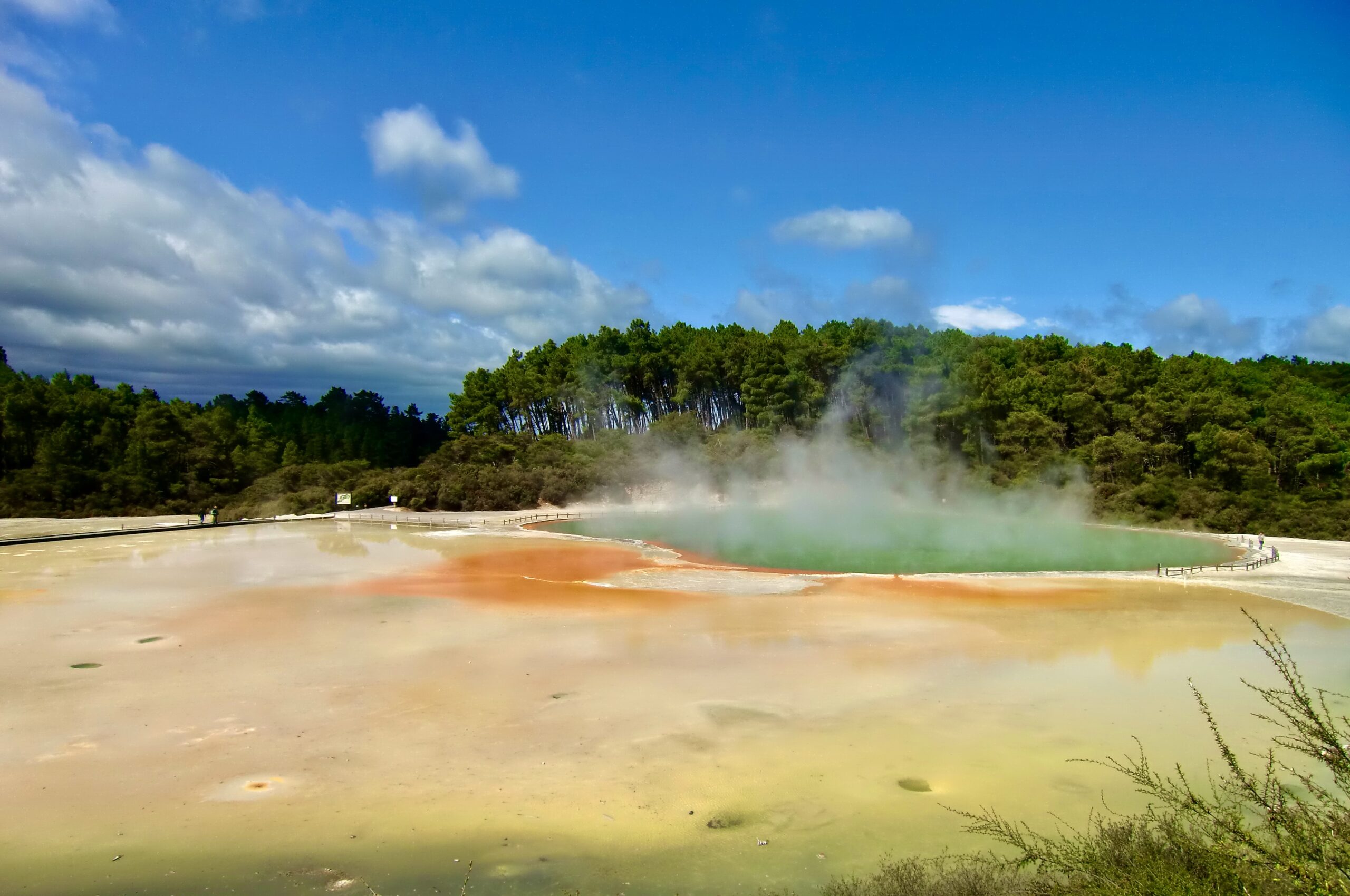
Day three in Rotorua was devoted entirely to the geothermal landscape — from a colorful thermal park in the morning to a geyser field in the afternoon, and a lakeside hot spring in the evening. If you know Beppu’s famous “Jigoku Meguri” (Hell Tour) in Japan, the concept is similar, but the scale is larger and the experience is immersive in a different way: you’re walking through open countryside, not a managed city attraction, with the ground hissing and steaming around you for hours at a stretch.
Morning: A Walk Around the Lake
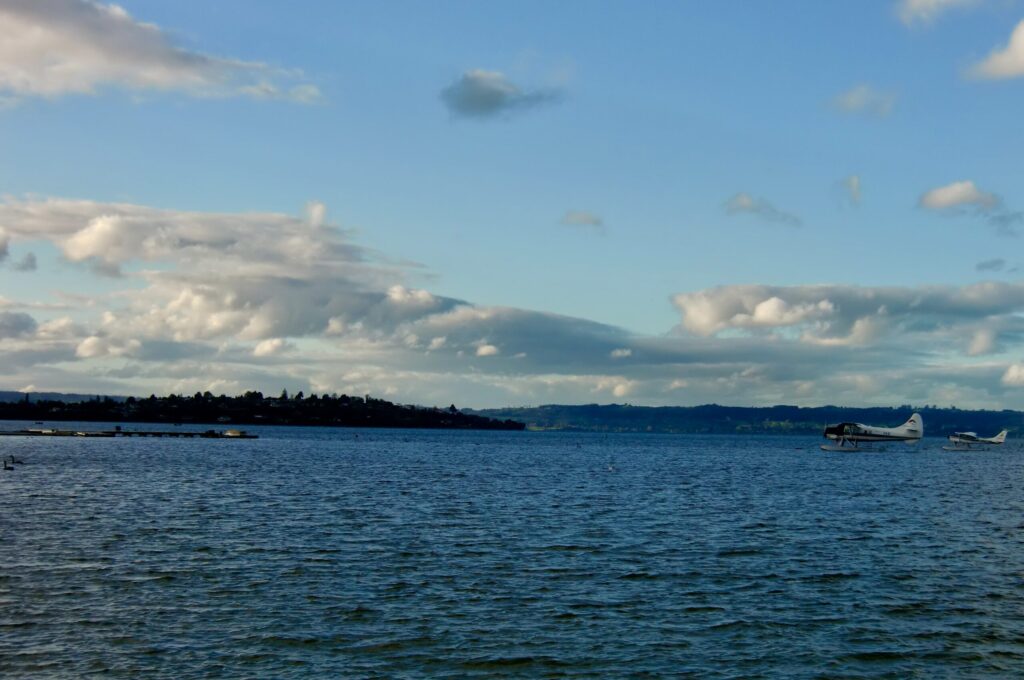
The day started slowly, with a walk along the edge of Lake Rotorua. Quiet water, morning light, and that unmistakable sulfur smell drifting in on the wind — a combination unique to this city and immediately pleasant once you’ve made peace with it. Coffee and breakfast at a café, then south toward Wai-O-Tapu.
Wai-O-Tapu: The Earth’s Color Palette
About 30 minutes south of Rotorua, Wai-O-Tapu Thermal Wonderland is the kind of place that makes you question whether you’re still on the same planet. I spent around two hours walking the circuit, and I stopped for a photograph every few minutes.
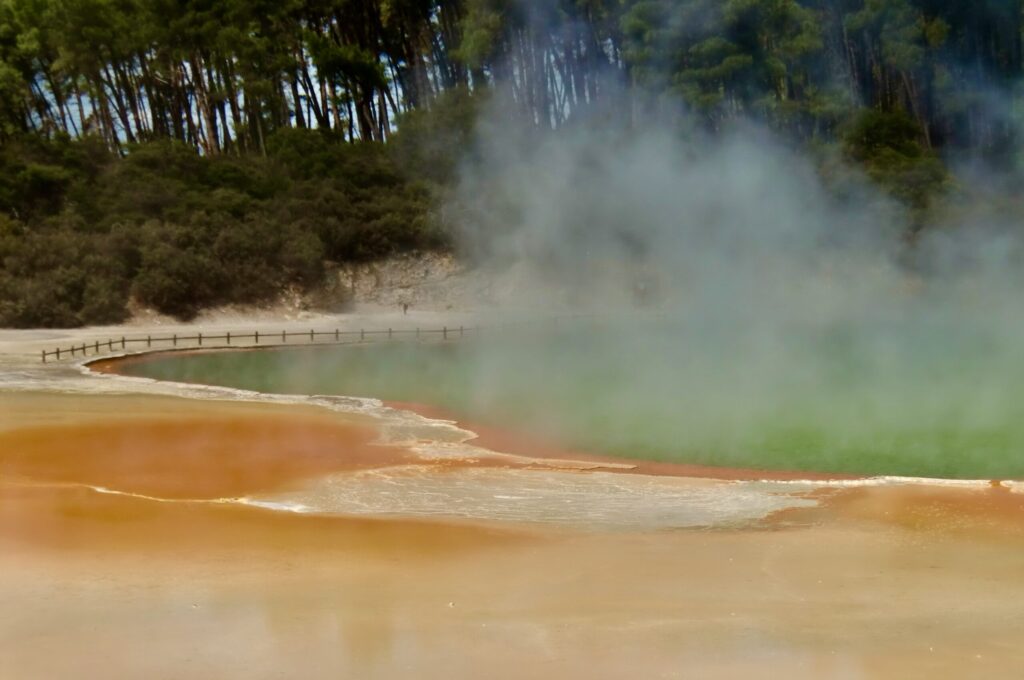
Champagne Pool
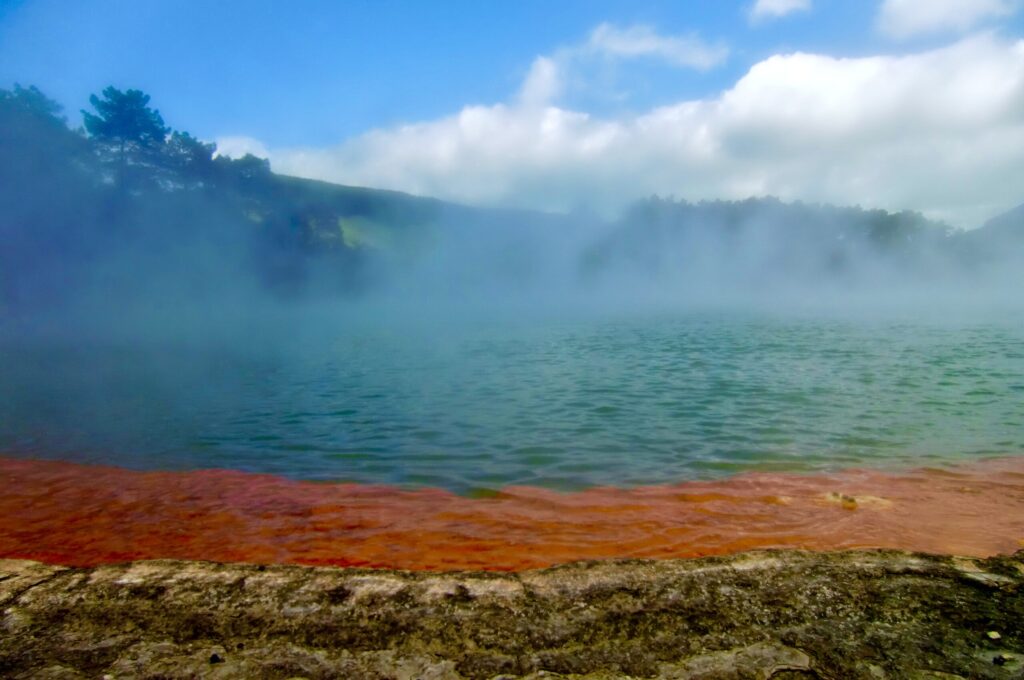
The most famous feature: a wide crater pool ringed in vivid orange, the water itself a deep and slightly unreal green, steam rising continuously from the surface. The color combinations shouldn’t exist in nature. They do.
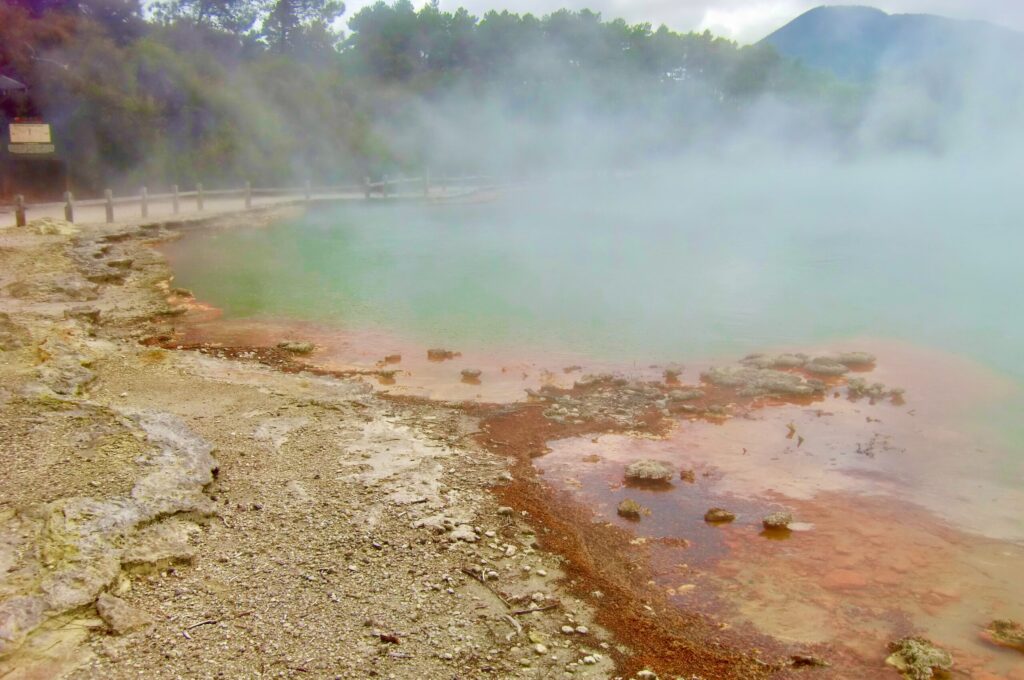
Artist’s Palette
A flat expanse of ground where mineral deposits have created a patchwork of yellows, greens, and oranges across the earth — as though someone had been testing colors there for a long time. The name is exact.
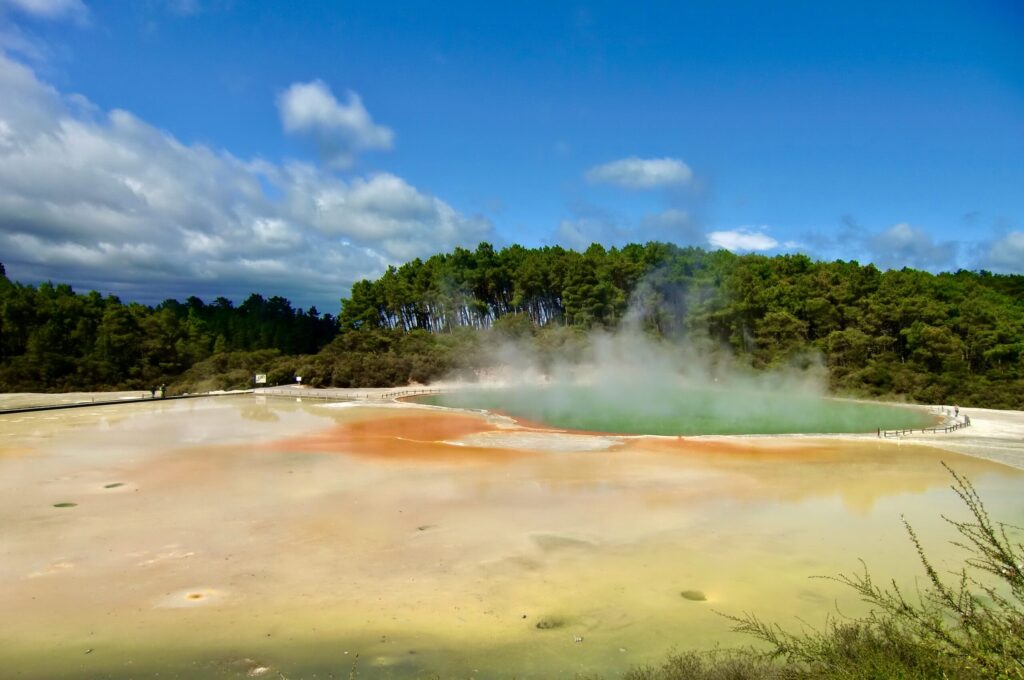
Mud Pools and Small Geysers
Throughout the walk, bubbling mud pools appear beside the path — quietly boiling, making low sounds, occasionally spitting. Japan has similar features, but the difference here is the format: you’re walking a proper trail through open landscape, at your own pace, for a couple of hours. The context makes the features feel more significant.
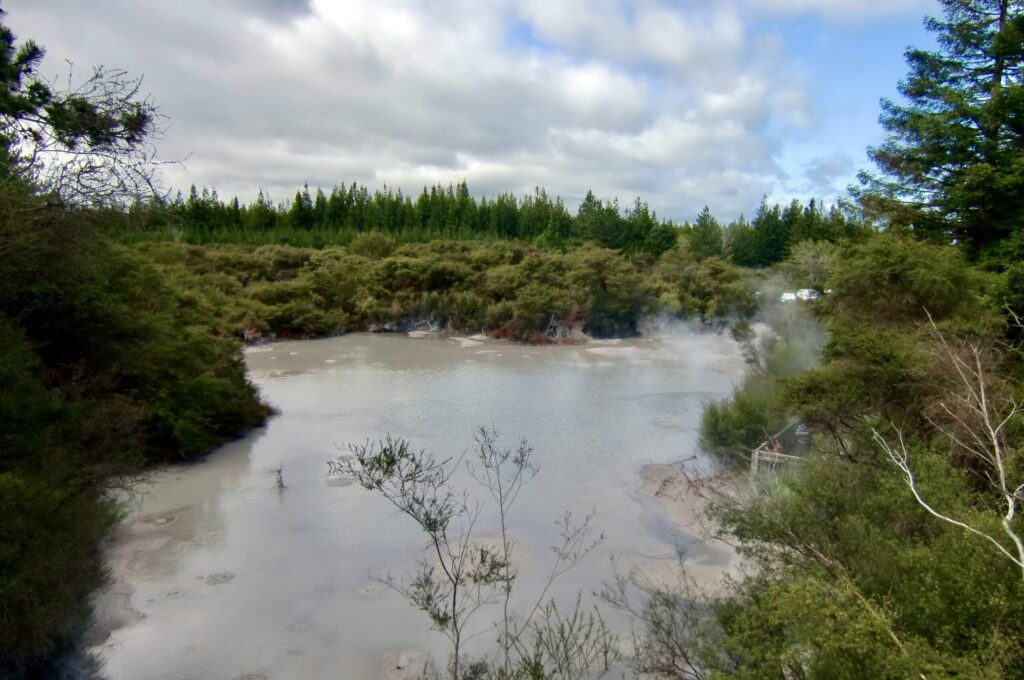
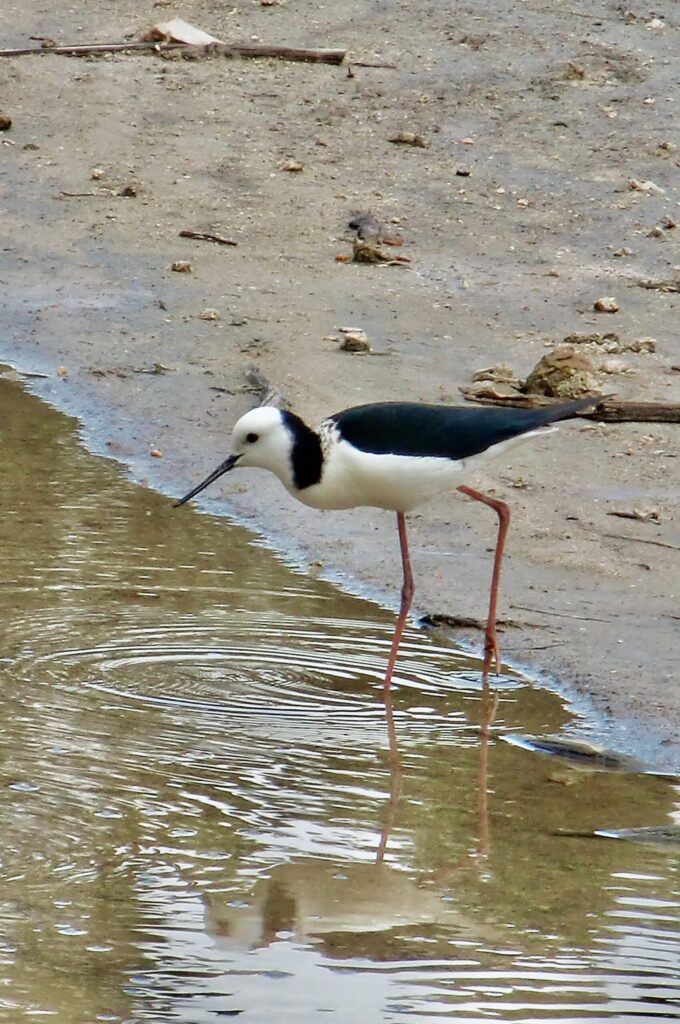
Te Puia: The Heart of Rotorua
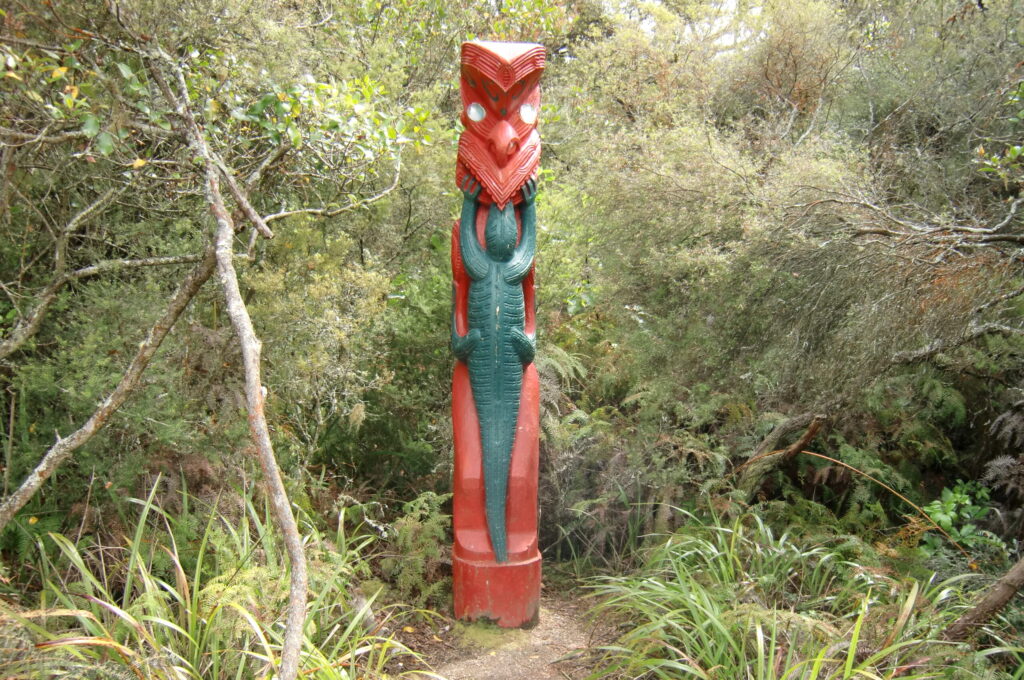
Back in the city, the afternoon stop was Te Puia — a combined geothermal park and Māori cultural center that functions as Rotorua’s central attraction.
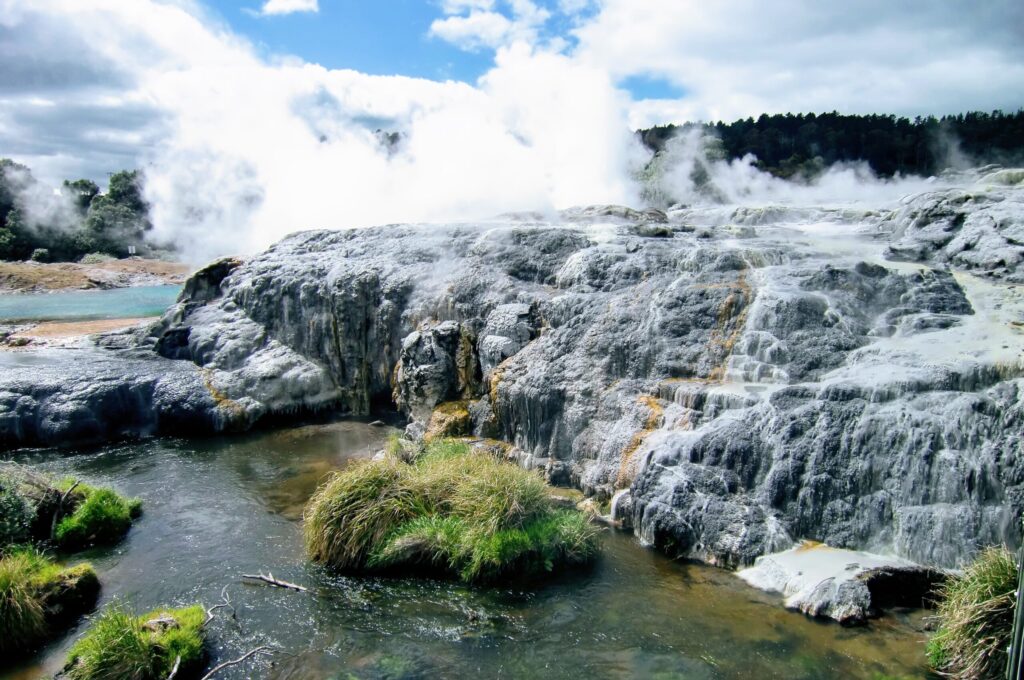
Pōhutu Geyser
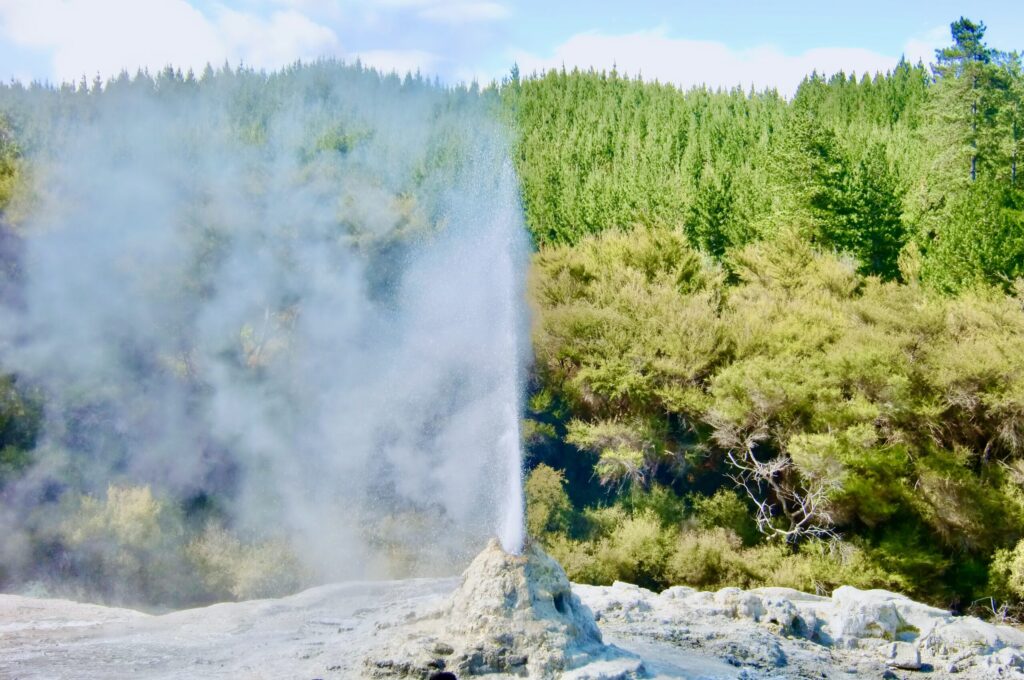
One of the largest active geysers in the Southern Hemisphere. When it fires — which it does multiple times a day — a column of steam and boiling water shoots high into the air with a sound that you feel in your chest before you hear it clearly. Standing close, the heat of the spray reaches your face. The photographs from this day hold up.
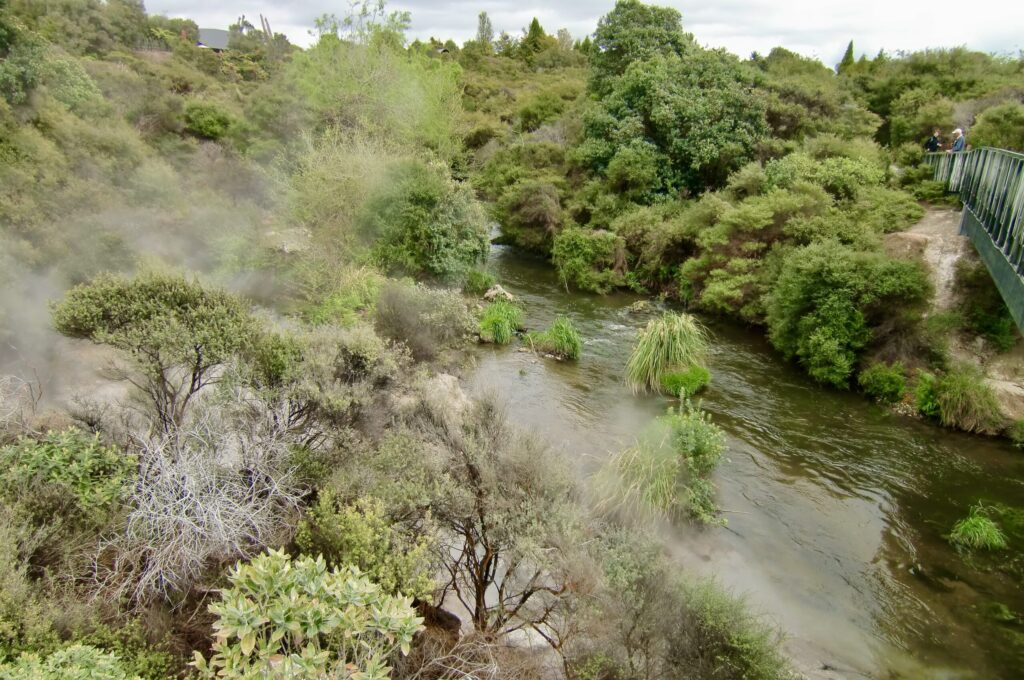
The Geothermal Valley Walkway
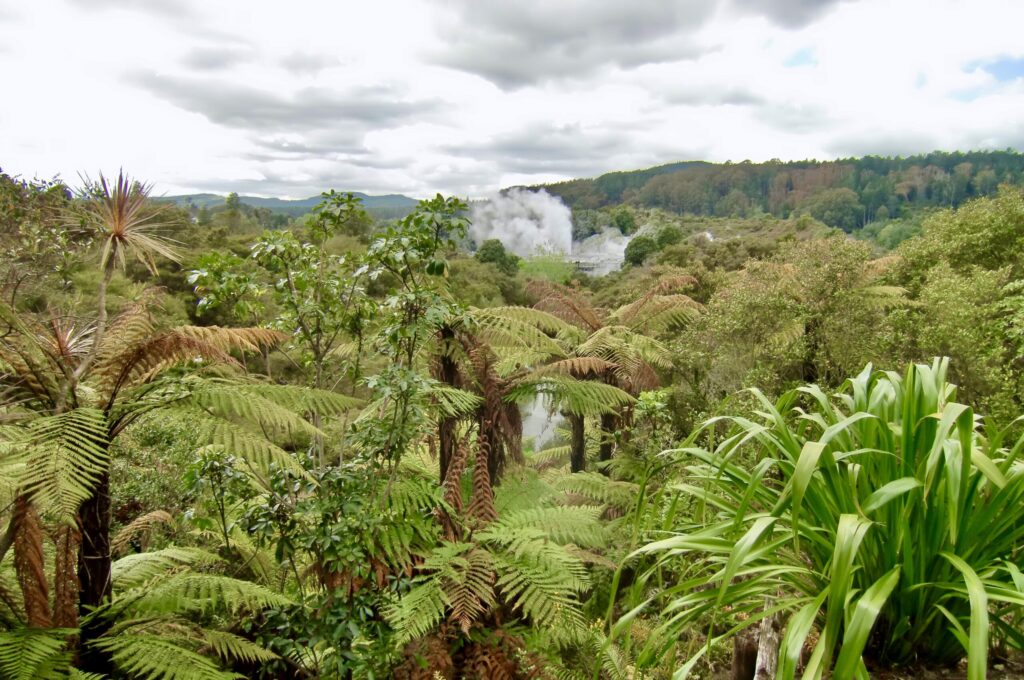
Steam fills the valley floor and drifts through the surrounding native bush. Walking through it has a slightly disorienting quality — dense green on one side, vents and boiling pools on the other, visibility shifting with the wind. Like being inside a landscape that’s still being made.
Polynesian Spa: Ending the Day Right
By early evening I was back in the city center, and the logical conclusion to the day was the Polynesian Spa on the lakefront — Rotorua’s best-known thermal bathing complex. The outdoor pools look directly over Lake Rotorua, and at that time of evening, with the light fading and steam rising off the water, the view through the mist had a quality that’s hard to describe without sounding excessive. The hot water after a day of walking helped considerably with that.

Dinner at Urban Gust
The hotel’s neighboring Italian restaurant, Urban Gust, handled dinner. I didn’t get a photograph, which I’m still slightly annoyed about, because the food was good. Early night to prepare for the drive out tomorrow.
Day 3 Summary
- Wai-O-Tapu: two hours of walking through one of the most visually striking landscapes I’ve seen anywhere
- Te Puia: the Pōhutu Geyser and the atmosphere of the geothermal valley
- Polynesian Spa: lake views and hot water, which is exactly what it sounds like and better than you’d expect
- Urban Gust: dinner, no photos, no regrets
Day 4: a stop at Paradise Valley Springs to meet some animals, then the coast — Tauranga.

コメント